
Last updated September 10, 2026
Full 25-point door and opener safety check with every visit - springs, cables, rollers, tracks, and your LiftMaster or Chamberlain opener included
You get a price before we start. It does not change when the truck arrives.
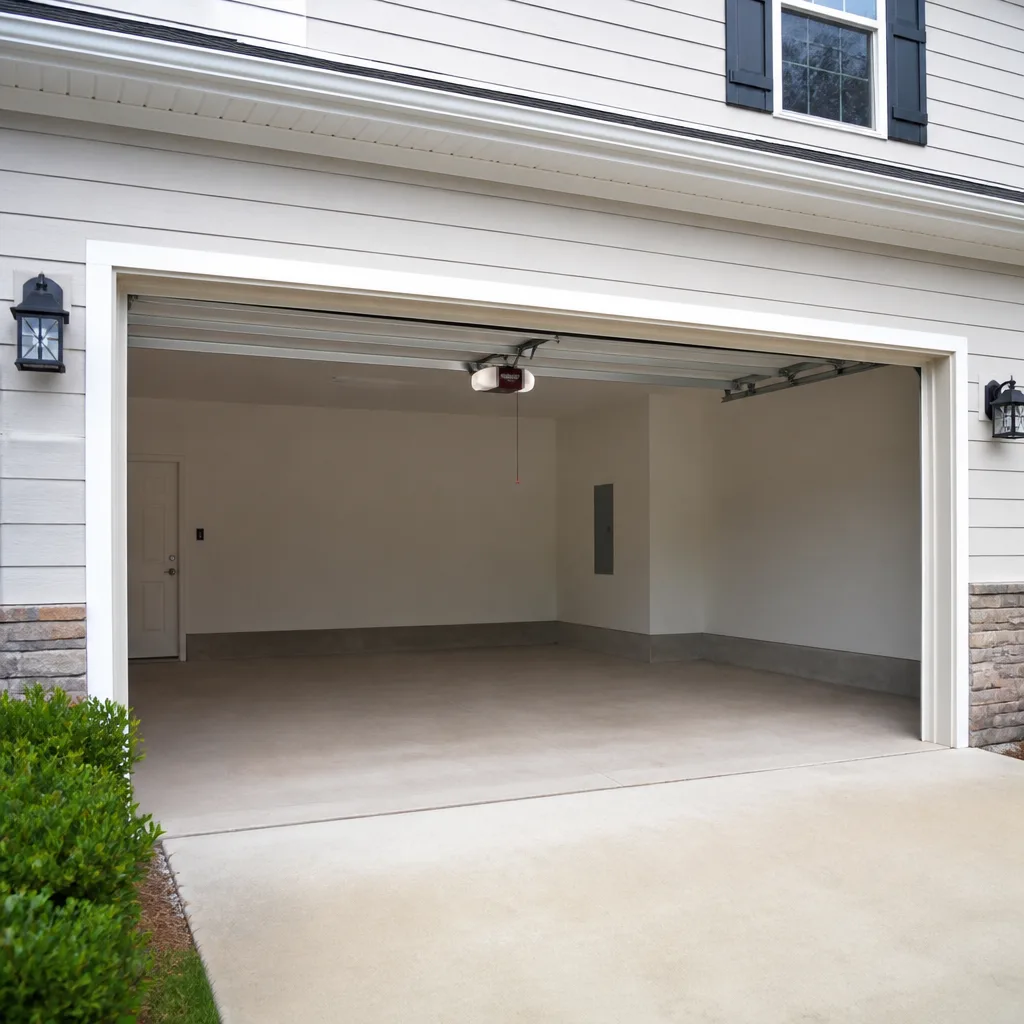
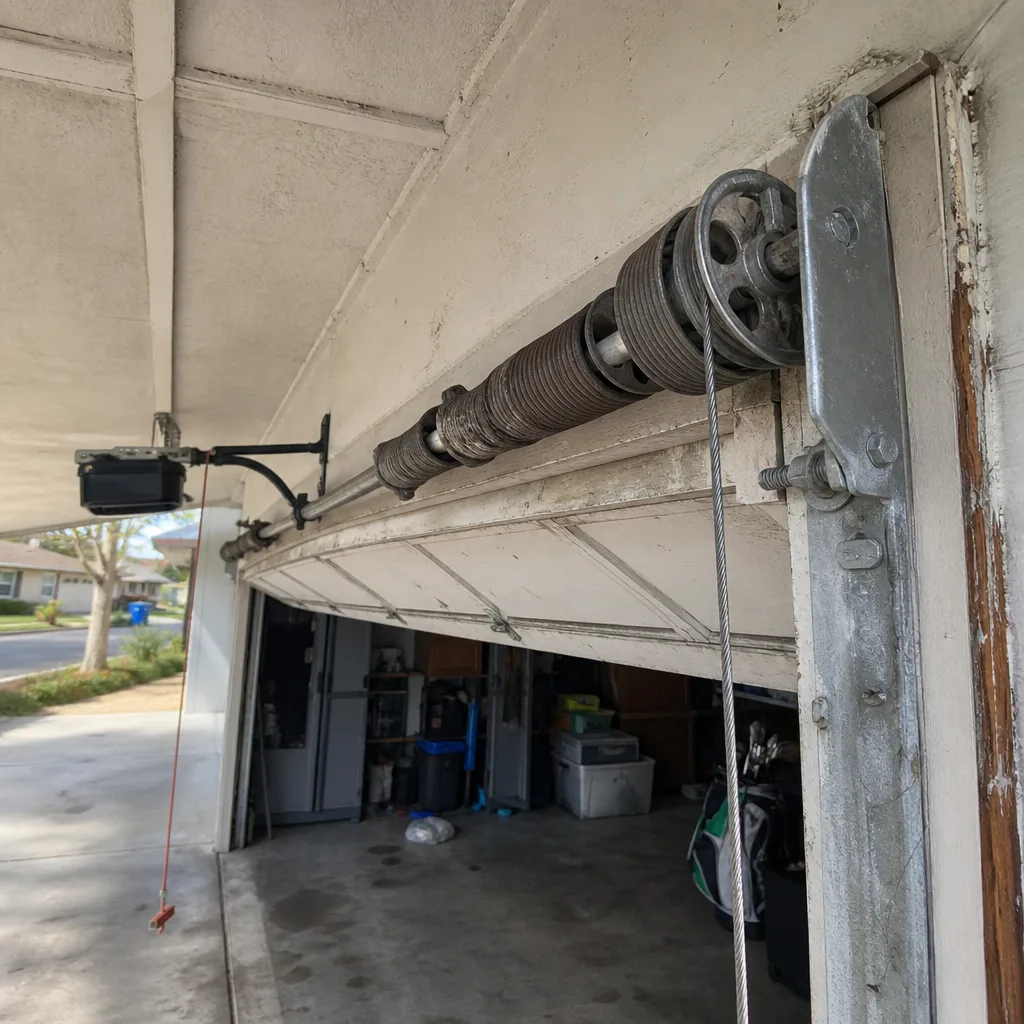 Before
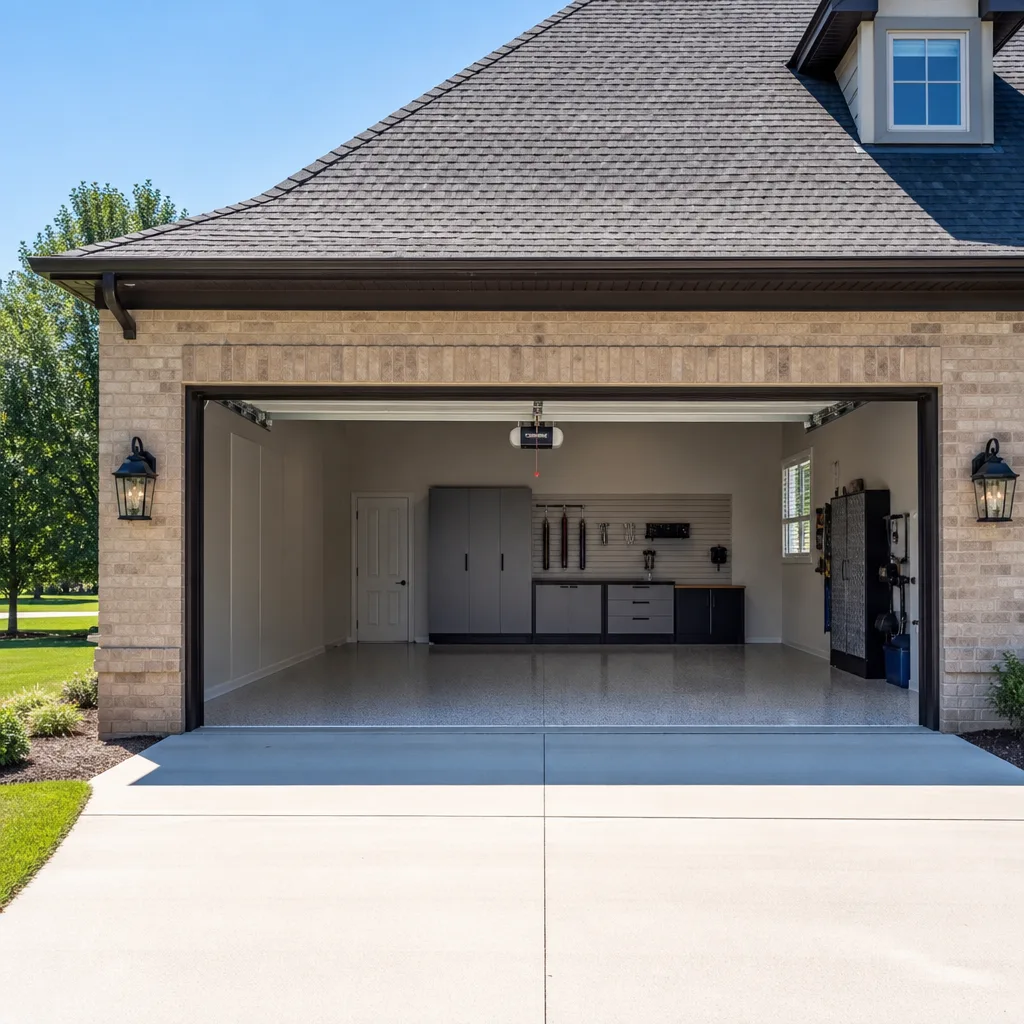
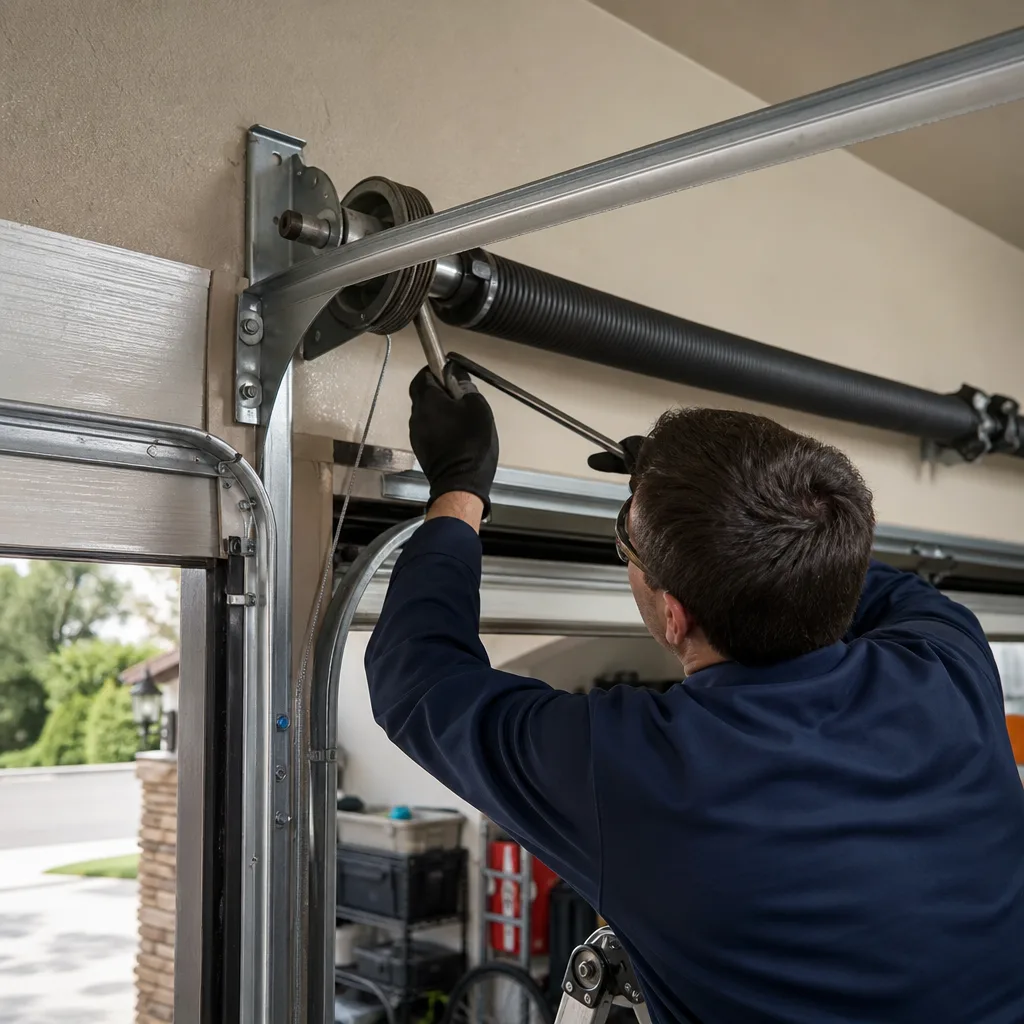 After
After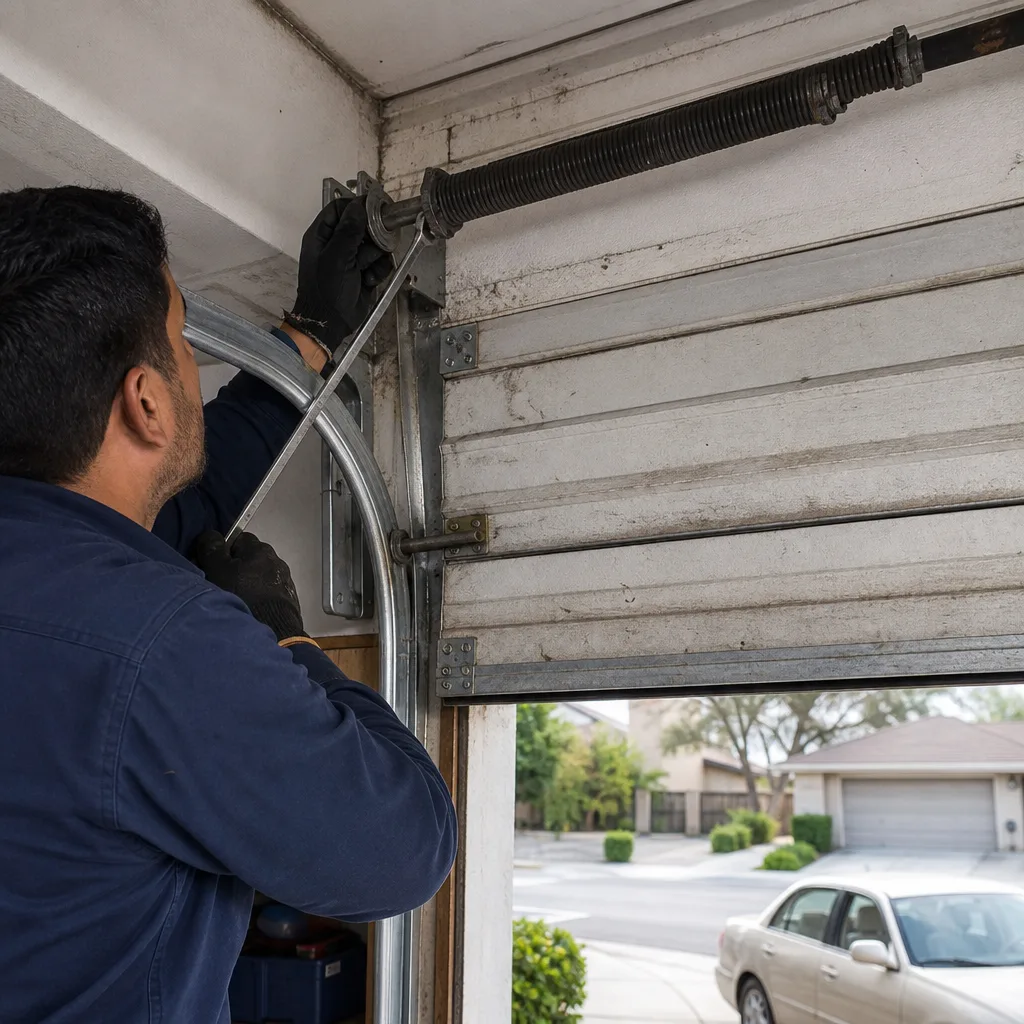 Before
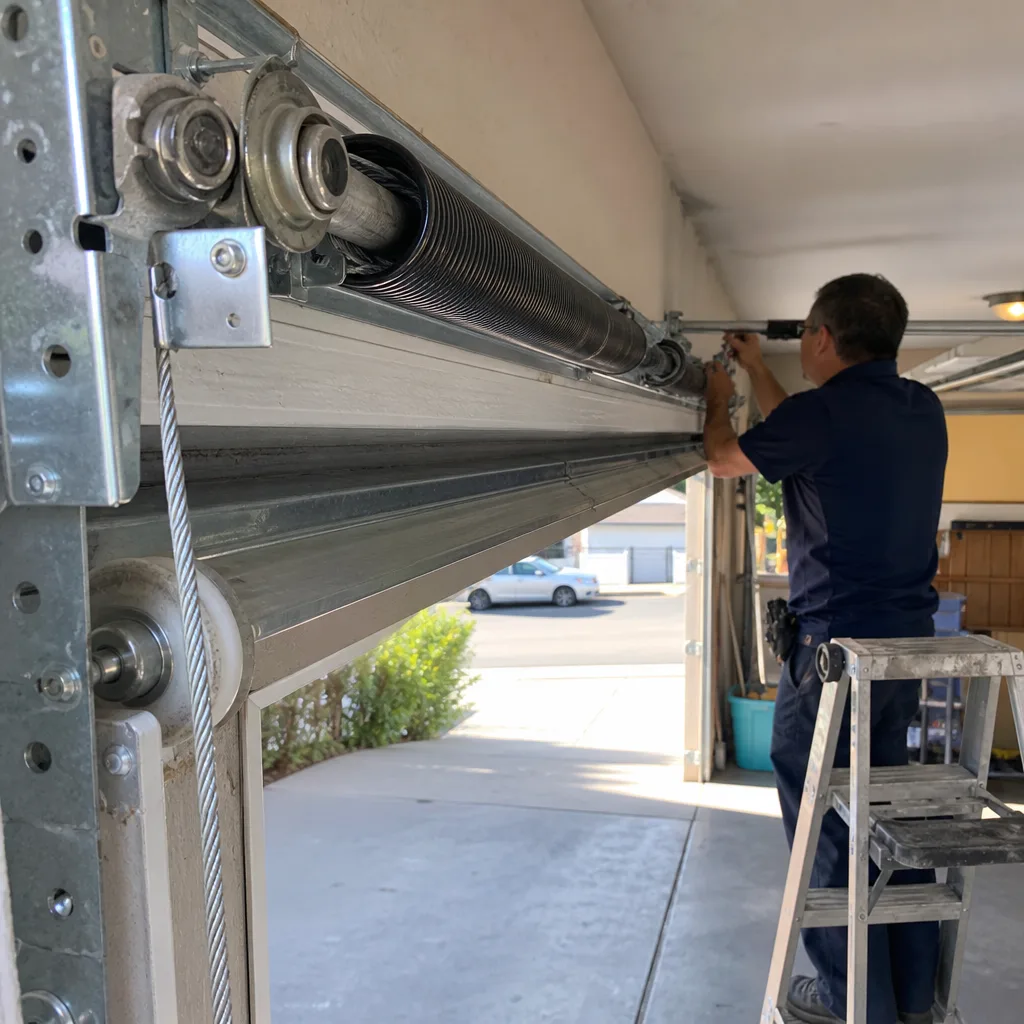 After
After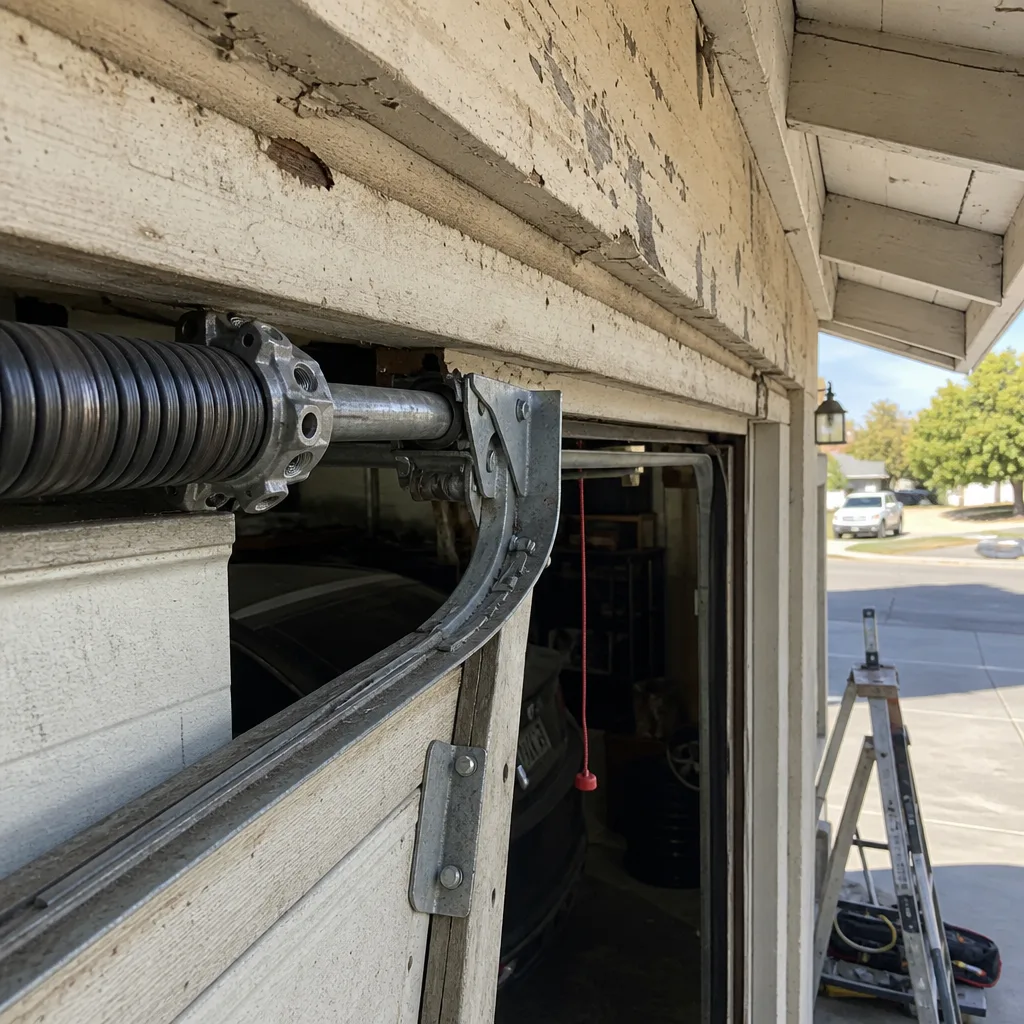 Before
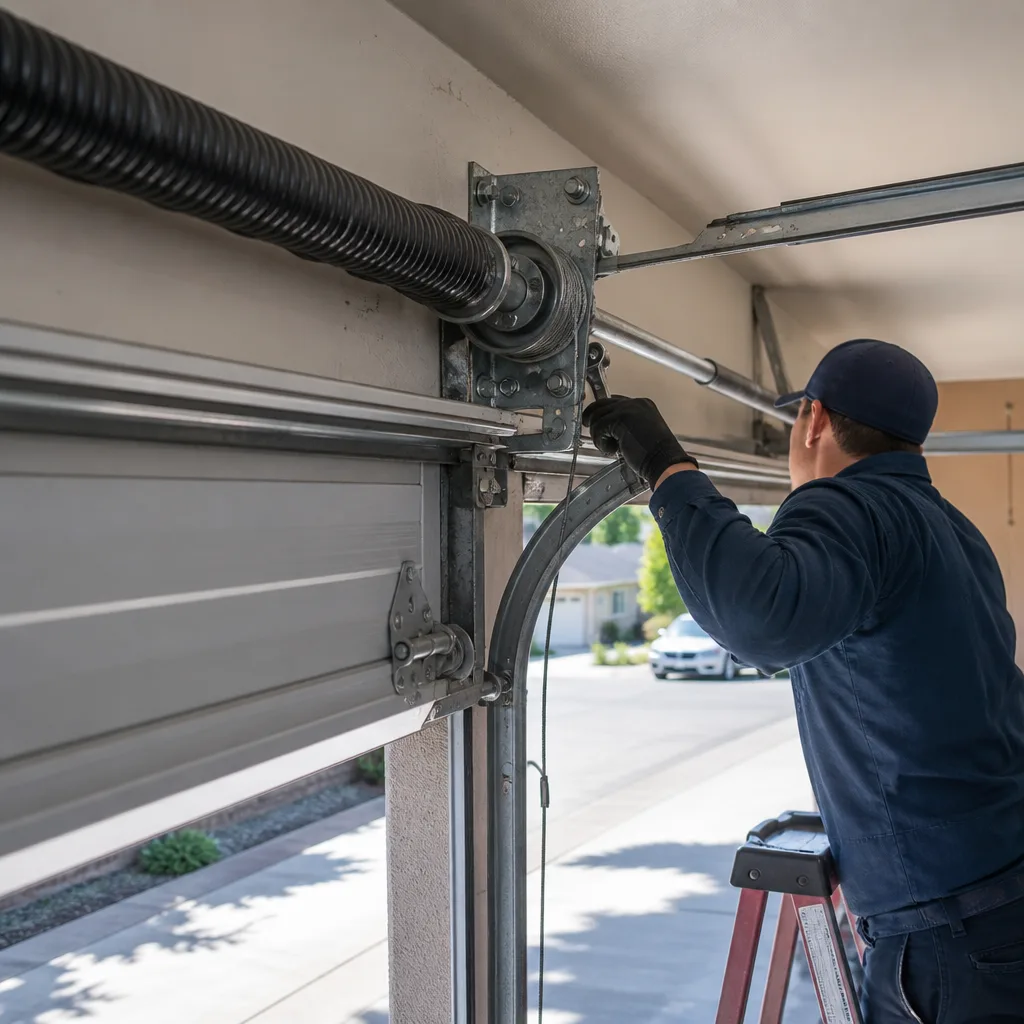 After
AfterThe Complete Guide to Garage Door in Santa Clarita
Santa Clarita sees roughly 100°F summer highs and sub-40°F winter nights - a 60-degree seasonal swing that warps cheap steel panels and degrades bargain-grade weatherstripping faster than most manufacturers’ warranties acknowledge. We’ve been called to Valencia townhomes where a three-year-old door already bows at the center seam, and to Saugus ranches where rollers have ground flat from ash-season grit. This guide maps every decision - material, insulation, gauge, spring rating, finish, and balance - to the specific conditions of the Santa Clarita Valley, so you choose a door that still works quietly a decade from now.
Quick Answer
A garage door in Santa Clarita should be 24- to 25-gauge steel minimum with an R-value of 10-12 for attached garages, powder-coated or baked-enamel finish rated for UV and particulate exposure, and springs calibrated for the valley’s thermal expansion range rather than coastal specs. Total cost of ownership over ten years typically runs $2,800-$5,500 installed - see our Garage Door Cost Breakdown: The Santa Clarita Homeowner’s Reference for 2026 for how these numbers break down - with spring replacement at year 7-10 adding $180-$340. The right door, properly balanced, will outlast two cheap installations.
Table of Contents
- How Santa Clarita’s Climate Changes What You Need
- Steel Gauge, Insulation, and Finish: What Holds Up Here
- HOA Design Rules in Valencia, Stevenson Ranch, and Saugus
- Installed vs. Balanced: The Number That Predicts Trouble
- Total Cost of Ownership Over 10 Years
- Which Brands and Models We Spec for Santa Clarita
- Maintenance for Ash Season and Thermal Cycling
- Choosing a Door You’ll Never Think About Again
How Santa Clarita’s Climate Changes What You Need
The Santa Clarita Valley sits in a high desert transition zone. Summer afternoons hit 100°F regularly in Canyon Country and Newhall. Winter nights drop below 40°F. That 60-degree swing, repeated daily during shoulder seasons, does specific damage that coastal Los Angeles homeowners rarely see.
Thermal expansion in steel panels. A 16-foot wide steel door expands roughly 1/8 inch per 10 degrees of temperature change. Over our seasonal range, that’s nearly 3/4 inch of movement at the panel seams. Cheap 27-gauge steel, common in builder-grade installations, fatigues at those seams within three to five years. We’ve replaced doors in Valencia’s older tracts where the center panel has developed a visible bow, letting dust and Santa Ana winds straight into the garage. Twenty-four-gauge steel, or 25-gauge with reinforced stiles, handles that movement without deforming.
UV degradation of weatherstripping and finish. Santa Clarita averages 286 sunny days yearly. Standard PVC weatherstripping becomes brittle in four to six years here, versus eight to ten in shaded or coastal environments. The bottom seal on a south-facing door in Stevenson Ranch often cracks first. We spec silicone-infused or EPDM rubber seals for Santa Clarita installations, and we check them on every tune-up.
Wildfire particulate and roller corrosion. The 2019 Tick Fire and recurring summer smoke events have changed maintenance needs. Ash is alkaline and hygroscopic - it attracts moisture and accelerates oxidation in standard steel rollers. In Canyon Country and Sand Canyon, we’ve seen track corrosion start within two years of a heavy fire season. Nylon rollers with sealed bearings and zinc-aluminum coated track hold up better. The finish matters too: standard painted steel chalks and pores open under ash exposure, while baked enamel or powder coat maintains integrity.
Spring tension calibration. Garage door springs are calibrated to a specific door weight at a specific temperature range. A spring rated for coastal LA, where daily swings are 15 degrees, loses proper tension faster in Santa Clarita’s 40-degree daily cycles. We calibrate springs for the valley’s thermal profile, and we use oil-tempered wire rather than cheaper galvanized stock - it handles fatigue cycles better.
Key climate takeaways for Santa Clarita:
- Minimum 24-gauge steel for single doors, 24-gauge or reinforced 25-gauge for doubles
- EPDM or silicone weatherstripping, not standard PVC
- Powder-coated or baked-enamel finish, not standard paint
- Nylon rollers with sealed bearings for fire-season areas
- Springs calibrated for high-desert thermal cycling
Steel Gauge, Insulation, and Finish: What Holds Up Here
Most homeowners choose steel. In Santa Clarita, that choice needs three specifications right: gauge, insulation core, and surface finish.
Steel gauge: the thickness that matters. Gauge numbers run backward - 24 is thicker than 27. Builder-grade doors in Santa Clarita’s 1990s and 2000s tracts are often 27- or 28-gauge, stamped to look substantial. They dent from basketballs, warp in heat, and transmit noise. We specify 24-gauge for single-car doors and 24-gauge with reinforced stiles for double-car openings. The weight difference is roughly 15 pounds, but the fatigue life triples. A 24-gauge door in Santa Clarita typically lasts 18-25 years versus 8-12 for 27-gauge.
Insulation: R-value and what it actually does. R-value measures thermal resistance. For detached garages in Santa Clarita, uninsulated or R-6 is adequate - the door isn’t conditioning living space. For attached garages, especially with bedrooms above, R-10 to R-12 makes a measurable difference in cooling load. We’ve measured attic temperatures in Santa Clarita homes with R-6 doors hitting 140°F in July; R-12 doors reduce that by 15-20 degrees. The insulation type matters too: polystyrene (white bead board) costs less but settles and gaps over time. Polyurethane (foamed-in-place) adheres to the steel skins, adds structural rigidity, and maintains R-value for the door’s life. For Santa Clarita’s thermal cycling, polyurethane is worth the 20% premium.
Finish: the coating that faces the sun. Standard painted steel uses a polyester topcoat that chalks and fades in five to seven years of Santa Clarita sun. Baked enamel (thermoset) cross-links during curing and holds color for 12-15 years. Powder coating, electrostatically applied and oven-cured, is thicker and more chip-resistant - ideal for homes near construction or with gravel driveways where stone spray is common. We see the best long-term results from Clopay’s Ultra-Grain finish and Amarr’s WeatherGuard coating in Santa Clarita installations. Both are baked systems with UV stabilizers formulated for inland exposure.
| Specification | Builder Grade | Santa Clarita Spec | Expected Life |
|---|---|---|---|
| Steel gauge | 27-28 | 24-25 reinforced | 8-12 yrs vs. 18-25 yrs |
| Insulation | None or R-6 polystyrene | R-10-12 polyurethane | Settles vs. maintains |
| Finish | Standard paint | Baked enamel or powder | 5-7 yrs vs. 12-15 yrs |
| Weatherstrip | PVC | EPDM or silicone | 4-6 yrs vs. 8-10 yrs |
Installed cost for a properly spec’d double door in Santa Clarita runs $1,800-$2,800, depending on window configuration and opener pairing. A builder-grade equivalent might save $400 upfront. Over fifteen years, the cheap door costs more in energy, maintenance, and early replacement.
HOA Design Rules in Valencia, Stevenson Ranch, and Saugus
Santa Clarita’s master-planned communities enforce design guidelines that can reject a garage door after installation. Ordering without checking permits and codes has cost homeowners in Valencia the price of a door plus re-installation.
Valencia: the most restrictive corridor. Valencia’s various villages - Northbridge, Westridge, Bridgeport - maintain active architectural committees. Common requirements: no windows in the top section (or specifically approved grille patterns only), earth-tone color palettes from a defined list, and prohibition of certain carriage-house hardware as “ornamental excess.” The Valencia HOA typically requires submission of manufacturer cut sheets and color samples before work begins. Approval takes 10-14 business days. We’ve seen rush orders sit in garages for three weeks waiting for committee review. The smart sequence: select door, submit to HOA, schedule installation for approval date plus buffer.
Stevenson Ranch: moderate with view considerations. Stevenson Ranch’s design standards focus on streetscape consistency rather than detail restriction. Window configurations are more flexible, but reflective glass is prohibited for hillside visibility reasons. Color must match or complement the approved palette for the specific tract. The HOA responds faster - typically 5-7 days - but requires a licensed contractor’s certificate of insurance, which we provide with every submission.
Saugus and Canyon Country: lighter oversight, fire codes apply. Older Saugus neighborhoods and Canyon Country unincorporated areas have fewer HOA restrictions, but Santa Clarita’s wildfire-urban interface codes affect material choices. Solid wood doors, while permitted in some architectural styles, require ignition-resistant treatment or are restricted in specific Very High Fire Hazard Severity Zones. We’ve helped homeowners in Sand Canyon navigate this: a steel door with wood-grain finish satisfies both the aesthetic preference and the fire code.
The approval process we recommend:
- Request the current architectural guidelines from your HOA management company - not a neighbor’s copy from five years ago, which may be outdated.
- Select three compliant options with your garage door professional, including manufacturer literature with exact color names and window codes.
- Submit with contractor license and insurance documentation.
- Receive written approval before ordering; verbal approvals from board members do not protect against later enforcement.
- Schedule installation to follow approval by no more than 30 days - some HOAs require re-approval if the project stalls.
We handle HOA submissions routinely for Santa Clarita customers. The half-hour of paperwork prevents the $2,000 mistake of a non-compliant installation.
Installed vs. Balanced: The Number That Predicts Trouble
A door can be fully installed and dangerously out of balance. This distinction matters more in Santa Clarita than most places, because thermal cycling turns a small imbalance into a major failure.
What balance means. A properly balanced garage door weighs effectively zero pounds when disconnected from the opener. You should be able to lift it smoothly with one hand and have it stay at any position between fully open and fully closed. The springs carry the door’s weight; the opener only guides movement. When balance drifts, the opener strains, cables fray unevenly, and the door can slam or reverse unpredictably.
How balance drifts in Santa Clarita. Springs lose tension through cycle fatigue - each open/close is one cycle, roughly 1,500 yearly for a typical household. But temperature swings accelerate the loss. A spring calibrated at 70°F loses roughly 2% tension per 10 degrees below its calibration point. In Santa Clarita’s 40°F January mornings, an improperly calibrated spring is already underperforming before cycle fatigue sets in. We’ve measured doors in Newhall that were 15 pounds heavy on the left side by year four - the spring on that side had fatigued faster from thermal stress concentration.
The test any homeowner can perform. Disconnect the opener (pull the red release cord), lift the door to waist height, and let go. A balanced door stays put. If it falls, it’s heavy; if it rises, it’s light. Either condition stresses components. We check balance on every service call in Santa Clarita, and we include it in our $89 Seasonal Tune-Up.
Why balance predicts long-term trouble. An unbalanced door overloads the opener motor, wears rollers unevenly, and twists the door panel - especially dangerous with 27-gauge steel that deforms permanently. The repair cascade starts with a $200 opener strain and ends with $1,800 for door replacement. Catching imbalance early is a $180 spring calibration. In 42 years, we’ve learned that balance is the single maintenance item that separates a 20-year door from a 10-year door.
Safety note: Garage door springs are under extreme tension and can cause serious injury or death if handled improperly. The balance test described above is a diagnostic check only. Never attempt to adjust or replace springs yourself. Our technicians are trained under the K.E.Y.S. values code - Krafted right, Every time, Your home first, Standing behind it - and we handle spring work as part of our standard service.
Total Cost of Ownership Over 10 Years
The sticker price on a garage door is only the first payment. For Santa Clarita homeowners planning to stay, we frame decisions around ten-year cost of ownership, which includes installation, expected maintenance, energy impact, and one major component replacement.
Scenario A: Builder-grade replacement, minimum spec.
- Initial installation: $1,400-$1,800
- Spring replacement at year 6-8: $180-$240
- Roller replacement at year 5: $120-$180
- Opener strain repair at year 7: $200-$280
- Weatherstrip and seal replacements (2x): $160-$240
- Energy cost (attached garage, R-6 equivalent): $180-$260 over 10 years
- Premature replacement at year 10-12: $1,400-$1,800
Ten-year total: $3,640-$5,800, with replacement looming.
Scenario B: Properly spec’d door, maintained.
- Initial installation: $2,200-$2,800
- Spring replacement at year 10-12: $220-$340 (heavier door, higher cycle springs)
- Roller replacement at year 8-10: $140-$200
- Weatherstrip replacement at year 8: $80-$140
- Energy cost (attached garage, R-12): $80-$140 over 10 years
- No premature replacement
Ten-year total: $2,720-$4,620, with 8-12 years of remaining service life.
The properly spec’d door costs less over time and avoids the disruption of premature failure. We see this pattern repeatedly in Santa Clarita’s long-tenure neighborhoods - Bouquet Canyon, Plum Canyon, the older Valencia tracts. Homeowners who bought right in 2005 are still on their original door; those who bought cheap are on their second or third.
Our standing offers affect this math for Santa Clarita customers: $50 Off Any Repair Over $250, Free Second Opinion on any written estimate, $89 Seasonal Tune-Up, and a permanent 5% discount for seniors and veterans. The tune-up alone, done every two years, typically extends component life by 30% through early imbalance and wear detection.
Which Brands and Models We Spec for Santa Clarita
We are factory-familiar with all major brands: LiftMaster, Chamberlain, Genie, Clopay, Amarr, Wayne Dalton, Craftsman, and Raynor. For Santa Clarita’s conditions, we default to specific product lines based on twenty years of warranty claim data and callback rates.
Steel doors: Clopay Gallery and Amarr Stratford. Clopay’s Gallery series uses 24-gauge steel with polyurethane insulation and a baked-enamel finish we’ve tracked at 14-year average color retention in Santa Clarita sun. The Stratford’s pinch-resistant panel design and heavy-gauge track hardware hold alignment through thermal cycling. Both offer window configurations that comply with Valencia’s stricter HOA standards.
Value option: Wayne Dalton Model 8300. For homeowners prioritizing upfront cost without sacrificing core durability, the 8300 uses 25-gauge steel with reinforced edges and a polyurethane core at a lower price point. The finish is standard paint, so we recommend upgrading to a premium coating for south-facing installations. We’ve installed hundreds in Saugus and Canyon Country with strong results when the finish upgrade is taken.
Opener pairing: LiftMaster 84501 or Chamberlain B970. Both use belt drive for quiet operation - important for bedrooms above or adjacent to the garage - and battery backup, now required by California law for new installations. The LiftMaster’s myQ integration is reliable; the Chamberlain offers slightly faster travel speed. We stock both on our trucks for same-day replacement when needed.
Brand loyalty matters less than specification discipline. A top-line door with the wrong gauge or finish for Santa Clarita will fail before a mid-line door properly spec’d. We match product to condition, not badge to preference.
Maintenance for Ash Season and Thermal Cycling
Santa Clarita’s maintenance calendar differs from coastal California. We structure care around two local stressors: wildfire particulate season (typically June through November) and thermal cycling intensity (March-May and September-November).
Quarterly homeowner checks:
- Visual roller and track inspection: Look for ash buildup in the track groove, which grinds rollers flat. Wipe with a dry cloth; do not lubricate the track, which attracts dust.
- Balance test: Disconnect opener, lift to waist height, release. Door should hold position. If not, call for service - spring tension has drifted.
- Weatherstrip check: Run a hand along the bottom seal and side seals. Cracks, gaps, or hardening indicate replacement need before winter wind and dust enter.
- Opener force test: Place a 2×4 flat on the ground where the door closes. The door should reverse on contact. If it doesn’t, the force setting needs adjustment - a safety issue, especially with grandchildren or pets.
Biennial professional service: Our $89 Seasonal Tune-Up includes spring tension verification and adjustment, roller and hinge inspection with replacement of worn items, track alignment check, opener force and limit calibration, weatherstrip assessment, and hardware torque verification. In Santa Clarita, we find that biennial service catches thermal-cycling damage before it cascades. Customers on this schedule average 40% fewer emergency calls.
Post-fire-season deep clean: After significant smoke events - 2019, 2020, and increasingly common summers - we recommend professional track and roller cleaning. Alkaline ash residue accelerates corrosion in steel components. Nylon rollers with sealed bearings reduce but don’t eliminate this need.
Choosing a Door You’ll Never Think About Again
The best garage door is the one you forget exists. It opens when you press the button, closes without noise, and doesn’t appear on your mental to-do list for fifteen years. Achieving that in Santa Clarita requires matching the right specifications to your specific situation, not buying the most expensive option or the cheapest. For more guides & resources tailored to local conditions, explore our blog.
Start with your garage’s relationship to the house. Attached garage with living space above? Prioritize R-value and belt-drive quietness. Detached workshop? Durability and wind-load rating matter more than insulation. Facing south or west? UV-resistant finish is non-negotiable. In a Very High Fire Hazard Severity Zone? Ignition-resistant materials may be code-required.
Match the neighborhood context. Valencia’s architectural committees reward restraint - clean lines, subdued hardware, approved colors. Stevenson Ranch allows more variation but values consistency. Saugus and Canyon Country permit broader choice, though wildfire codes may constrain. We review HOA documents with customers before any selection, and we maintain relationships with Valencia’s major management companies to streamline approval.
Demand the balance number. Any installer can show you a level door. Ask for the balance test result in pounds: “This door is balanced to within 2 pounds side-to-side.” If they don’t measure, they don’t know. At Garage Door Installation in Santa Clarita, we document balance on every job and provide the reading in writing with your invoice.
Get the full cost picture. Ask for ten-year cost of ownership, not just installation price. A reputable dealer knows these numbers. Be wary of anyone who won’t discuss maintenance intervals or pretends their door never needs service.
Verify who’s standing behind it. The 90-Day Done Right Promise should be in writing, with no dispute process or paperwork barrier. We’ve honored ours on a handful of jobs over 42 years - not because we make mistakes often, but because the promise means nothing if it isn’t real. Carl Dutton started this company on that principle in 1984, and we still operate by it.
The door you choose today will open and close roughly 15,000 times before you think about replacing it. Spec it right for Santa Clarita, maintain it on a reasonable schedule, and it will be the most reliable moving part of your house.
Common Mistakes to Avoid
- Ordering before HOA approval in Valencia or Stevenson Ranch. Architectural committees can and do reject installed doors, leaving the homeowner with removal cost and replacement delay. Always get written approval first.
- Choosing 27-gauge steel for the upfront savings. The $300-$400 saved disappears in earlier replacement, higher energy costs, and dent repair. In Santa Clarita’s thermal range, thin steel is false economy.
- Ignoring the R-value for attached garages. Homeowners notice the bedroom above the garage running hot in July, blame the air conditioner, and never trace it to the uninsulated door radiating attic heat.
- Accepting “it’s close enough” on balance. A door 5 pounds off-center will destroy itself and strain the opener. Demand the number, in writing.
- DIY spring replacement after watching an online video. Garage door springs store lethal energy. We’ve responded to emergencies where homeowners were seriously injured. This is not a savings worth risking.
- Skipping maintenance until something breaks. The $89 tune-up that prevents a $340 emergency call is the best return in garage door ownership. Most Santa Clarita homeowners who call us monthly for emergency service have never had professional maintenance.
- Assuming all “baked enamel” finishes are equal. Some manufacturers apply thin coatings that fail in high-UV inland exposure. Ask for specific warranty terms on color retention for Santa Clarita’s solar conditions.
When to Call a Professional
Call when the door makes new noises, reverses unexpectedly, opens slowly, or shows visible panel damage. Call after any impact - even minor collisions throw off balance. Call if the opener light blinks and the door won’t close; the safety sensors are misaligned, which we correct in minutes. Call before HOA submission if you’re uncertain about compliance - we review documents at no charge. And call immediately if a spring breaks: the door is dangerously heavy and the remaining spring is under uneven load.
Mainspring Garage Door Co. offers free estimates in Santa Clarita - call (661) 384-8741. A live person answers, 24/7, including nights, weekends, and holidays. No phone trees, no voicemail, no after-hours answering service. We’ll schedule a visit, measure your opening, review your HOA requirements if applicable, and provide a written quote with the flat price stated before any work begins.
Frequently Asked Questions
A properly spec’d steel garage door installed in Santa Clarita typically runs $1,800-$2,800 for a double door, including standard opener pairing. Single doors range $1,200-$1,800. Premium finishes, custom window configurations, or insulated doors for attached garages add $300-$600. We provide exact quotes after measuring your opening and reviewing your needs - call (661) 384-8741 for a free estimate with no obligation.
A properly spec’d and maintained garage door lasts 18-25 years in Santa Clarita. The valley’s 60-degree seasonal thermal swing shortens life for under-spec’d doors - we’ve seen 27-gauge steel fail in 8-12 years. Biennial professional maintenance, including spring tension checks and weatherstrip replacement, typically extends service life by 30-40%.
Yes. Valencia’s architectural committees require pre-approval for all exterior changes, including garage doors. Approval typically takes 10-14 business days and requires manufacturer cut sheets, color samples, and contractor documentation. Stevenson Ranch and Saugus vary by specific tract - we review HOA documents with customers at no charge to confirm requirements before ordering.
Cold-stiffened rollers and contracted metal components cause morning noise in Santa Clarita’s 40°F winter lows. Nylon rollers with sealed bearings reduce this significantly. If noise persists above 50°F, the door is likely out of balance or has worn hinges - both correctable in a standard service visit. Our $89 Seasonal Tune-Up addresses these issues before they become failures.
No. Garage door springs are under extreme tension and can cause serious injury or death if mishandled. The winding and unwinding process requires specialized tools and training. We do not provide DIY instructions for spring work. Our background-checked, uniformed technicians handle spring replacement safely, and the work is covered by our 90-Day Done Right Promise. Call (661) 384-8741 for same-day service in most cases.
Wildfire ash is alkaline and accelerates corrosion in steel rollers, track, and hardware. After significant smoke events, professional cleaning of track and roller assemblies prevents premature wear. We recommend nylon rollers with sealed bearings for fire-season areas like Canyon Country and Sand Canyon, and we check for ash residue accumulation on every service call during summer and fall months.
The Bottom Line
A garage door in Santa Clarita faces conditions that generic buying guides ignore: 60-degree daily thermal swings that fatigue cheap steel, wildfire particulate that corrodes standard components, and HOA design corridors that can reject an unapproved installation. The right door is 24-gauge steel minimum, polyurethane-insulated for attached garages, finished with UV-resistant coating, and balanced to a documented specification. Total ten-year cost of ownership favors quality upfront over replacement cycles. Maintain it biennially, respect the safety limits of spring and cable work, and the door becomes invisible - which is exactly how it should be. For homeowners who plan to stay, this is the only way to buy.
Written by Carl Dutton, Owner at Mainspring Garage Door Co., serving Santa Clarita since 2016.