
Last updated September 10, 2026
Full 25-point door and opener safety check with every visit - springs, cables, rollers, tracks, and your LiftMaster or Chamberlain opener included
You get a price before we start. It does not change when the truck arrives.
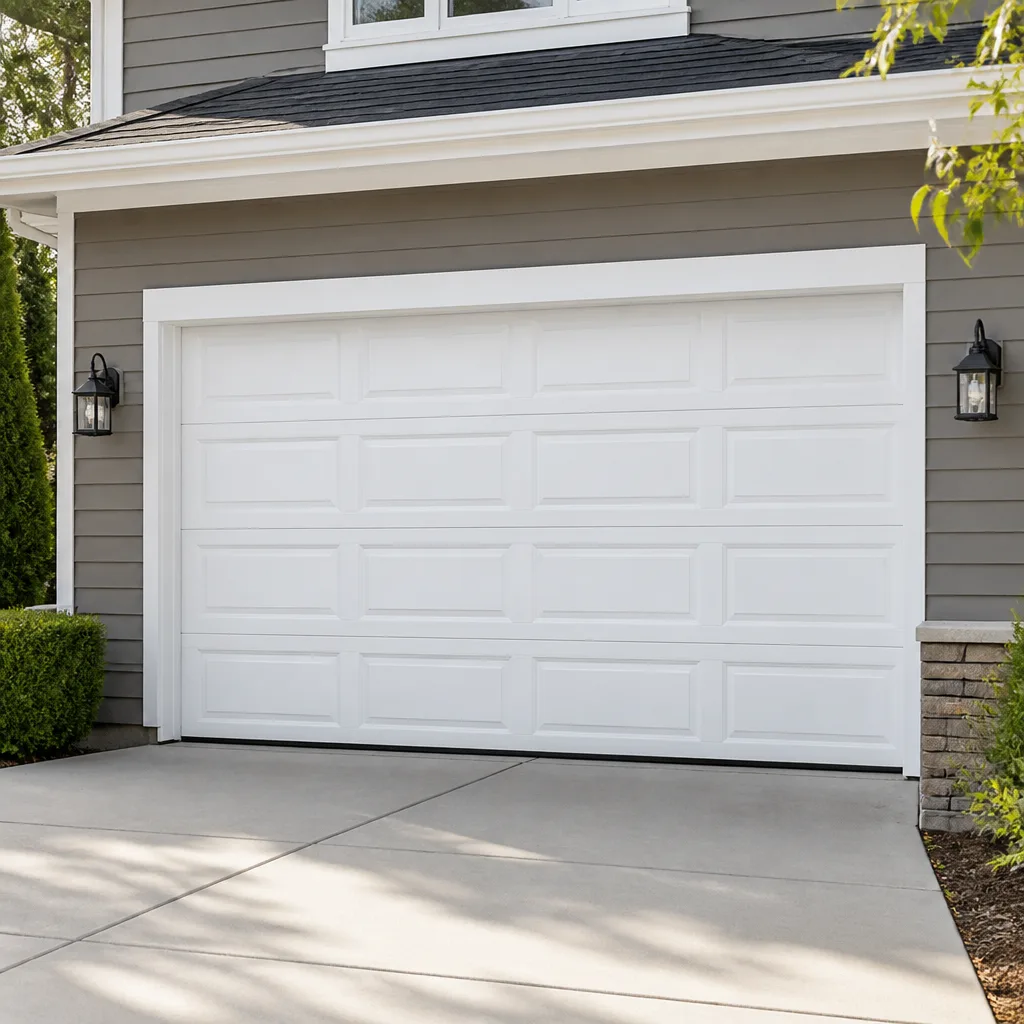
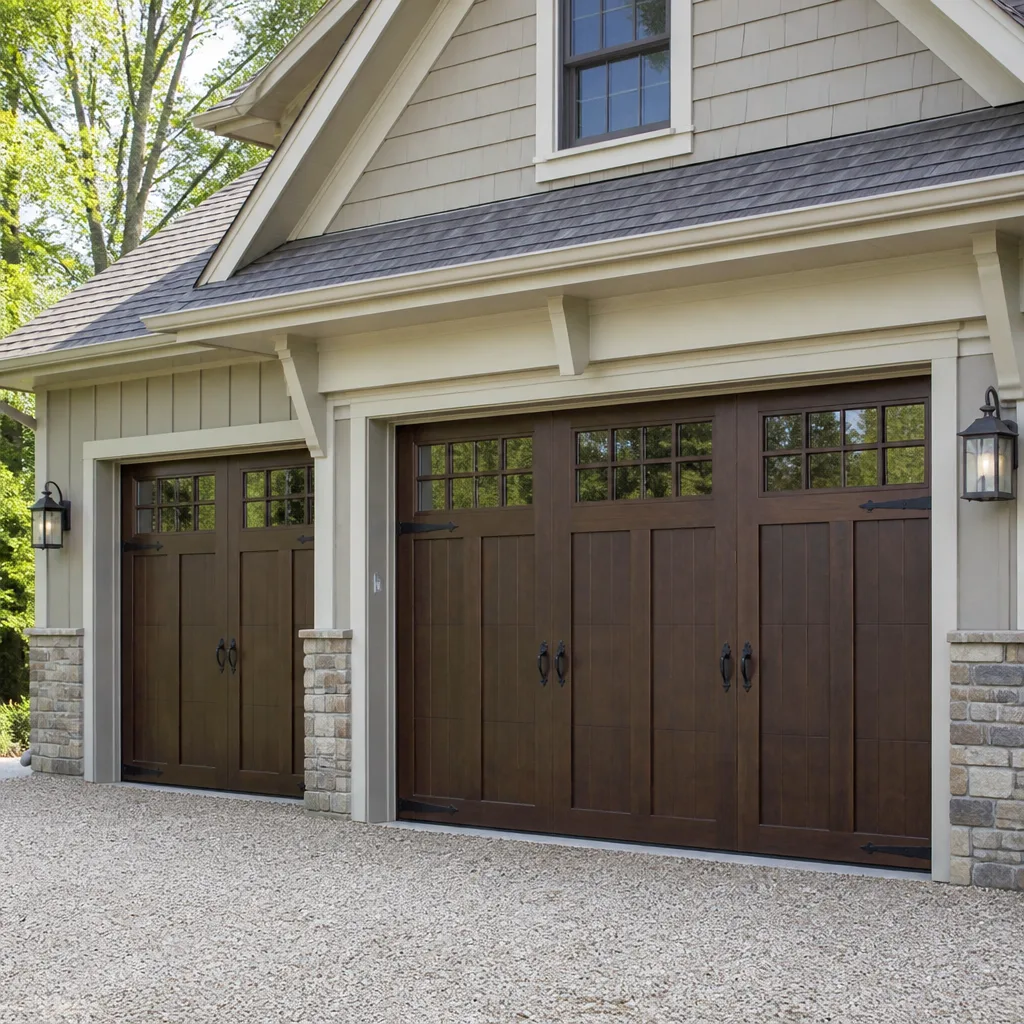
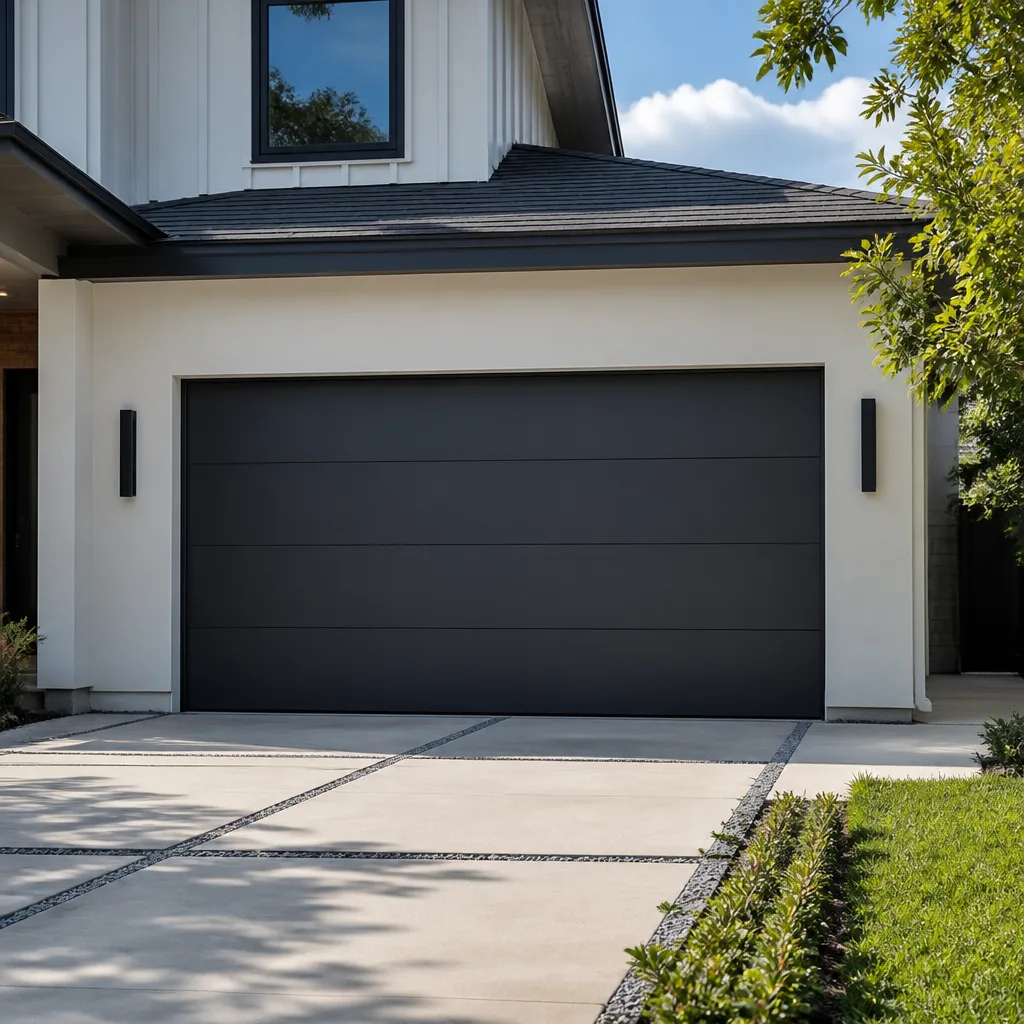
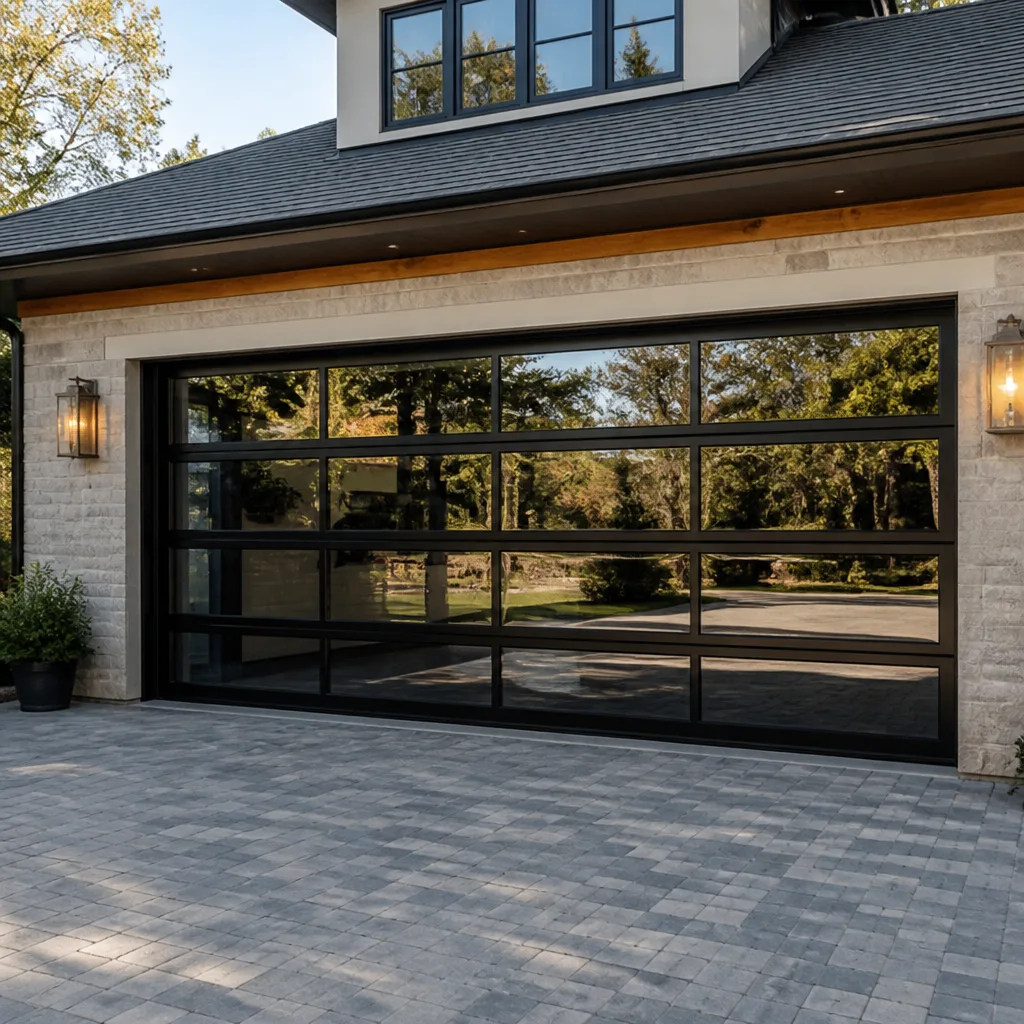
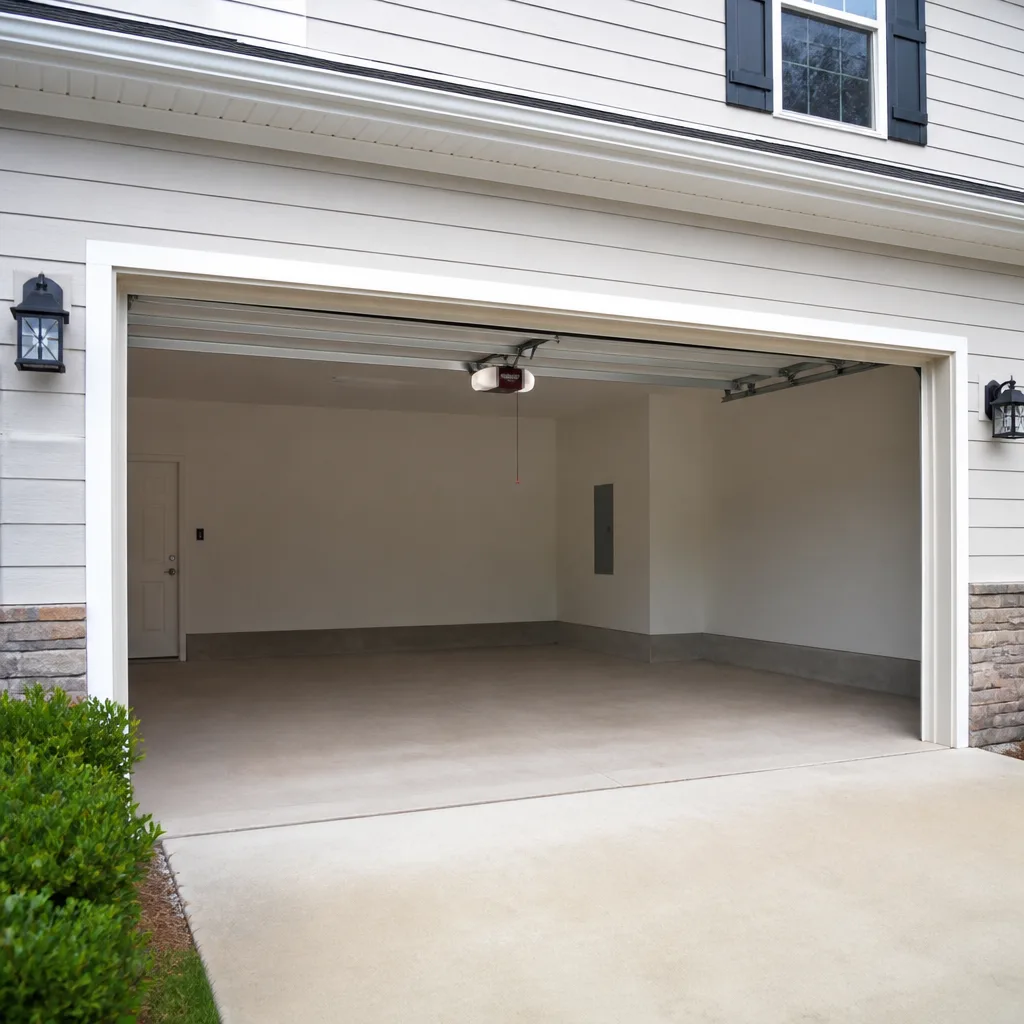
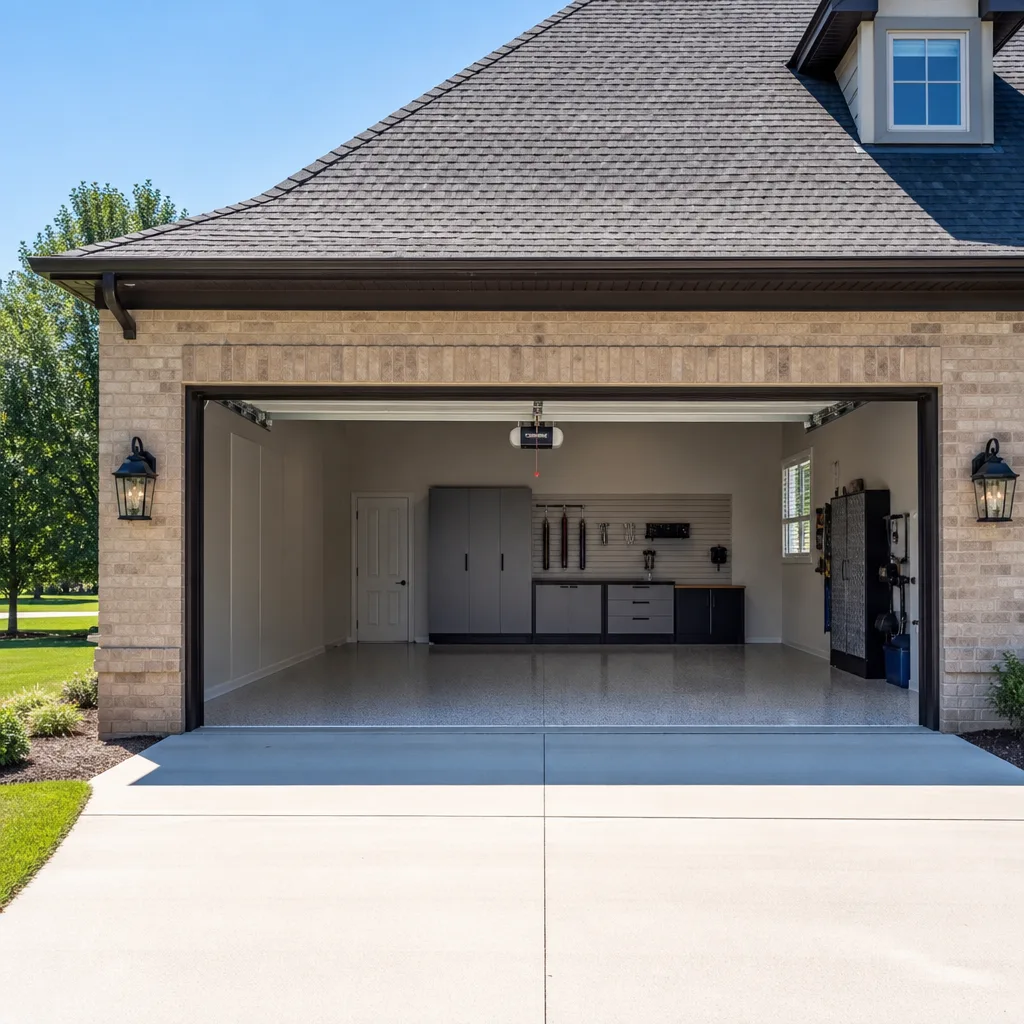
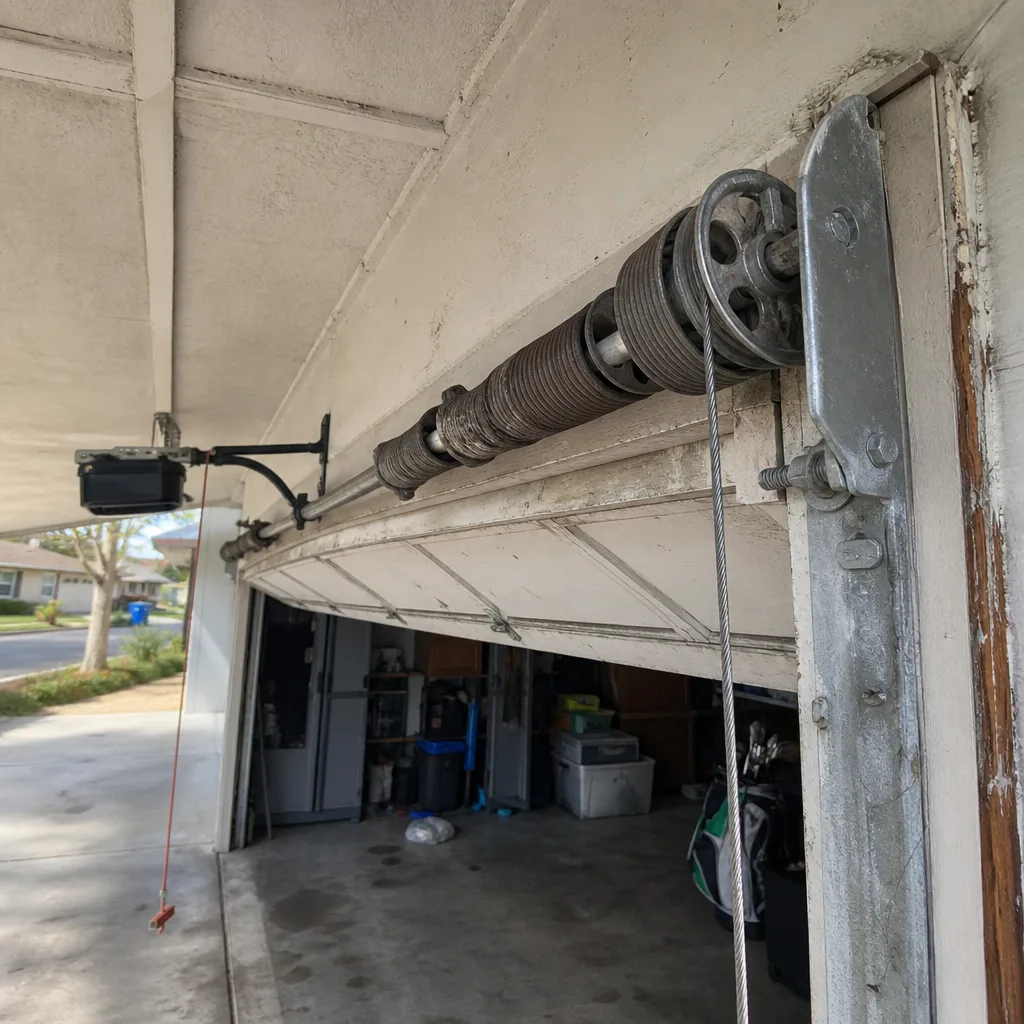 Before
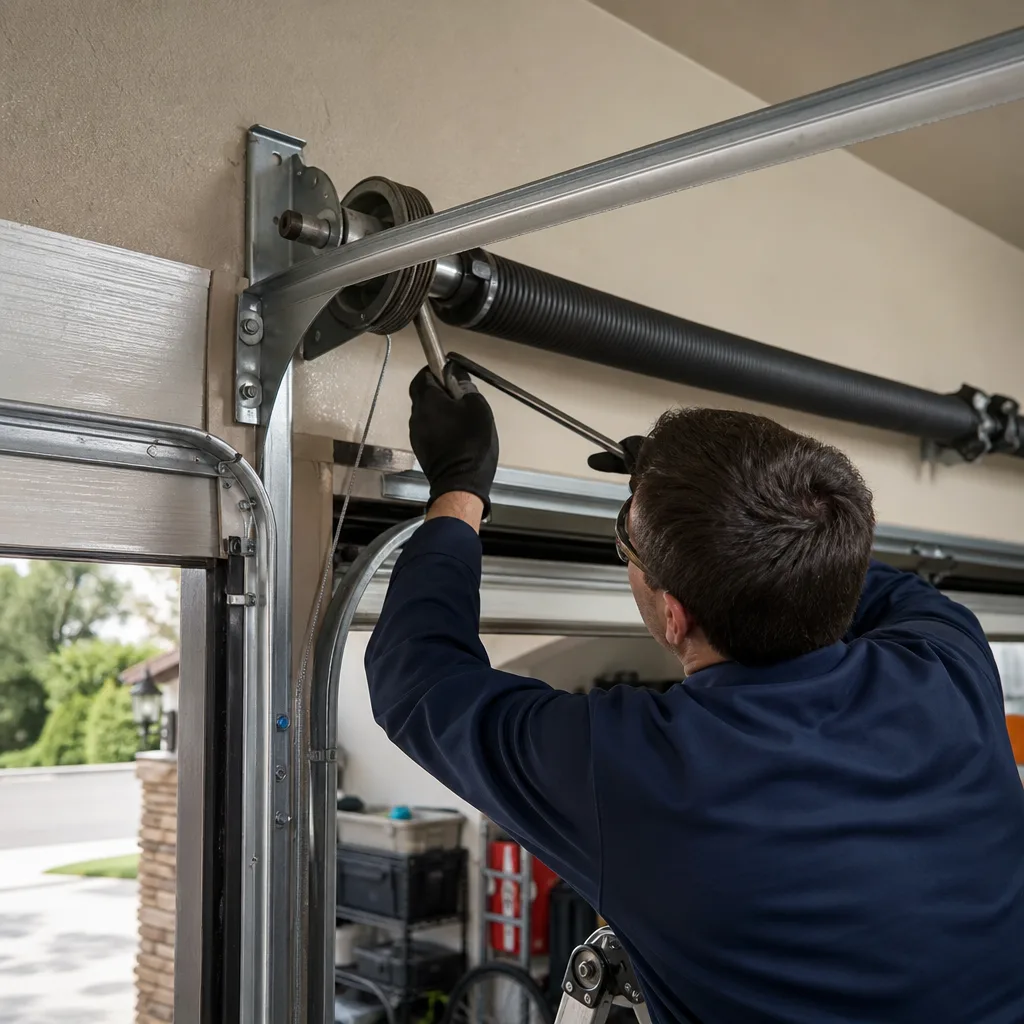 After
After Before
 After
After Before
 After
AfterGarage Door Permits, Codes & Inspections in CA: What You Need to Know
A homeowner in Los Angeles County who sells a home with an unpermitted garage door replacement can face a retroactive disclosure obligation and a buyer-demanded remediation credit that exceeds the original installation cost by a factor of three. We have seen this exact scenario twice in Santa Clarita over the past five years. In this guide, we will explain exactly when a permit is required for garage door work in California, what inspectors look for at rough-in and final, how Title 24 energy code applies to doors in climate zone 9, and why a contractor who offers to “skip the permit to save you money” is not saving you anything. For related reading, see our Garage Door Warning Signs: A Santa Clarita Homeowner’s Reference Guide.
Quick Answer
In California, a garage door replacement requires a building permit when the work involves altering the opening size, changing the structural header, replacing the frame, or upgrading from a non-insulated to an insulated door in an attached garage. A true “like-for-like” swap of the same door on existing hardware may not require a permit in some jurisdictions, but most full replacements in Santa Clarita and unincorporated Los Angeles County trigger permit requirements because they involve new tracks, spring systems, or opener electrical work.
Table of Contents
- When Is a Permit Required for Garage Door Work?
- The “Like-for-Like” Myth and How Contractors Misuse It
- California Title 24: Energy Code for Garage Doors in Climate Zone 9
- Santa Clarita vs. Unincorporated LA County: Different Rules
- What Inspectors Look For: Rough-In vs. Final Inspection
- How Unpermitted Work Is Discovered and What It Costs
- The Right Way to Ask a Contractor About Permits
- Common Mistakes to Avoid
- When to Call a Professional
- Frequently Asked Questions
- The Bottom Line
When Is a Permit Required for Garage Door Work?
California Building Code Section 105.1 requires a permit for “construction, alteration, movement, enlargement, replacement, repair, equipment, use and occupancy, location, removal and demolition” of any building or structure. For garage doors, this breaks down into specific scopes of work that nearly always trigger permitting.
Permit-required work includes:
- Replacing a garage door with a different size or style that requires modifying the rough opening
- Installing a new door where none existed, or converting a carport to an enclosed garage
- Replacing the structural header above the door opening
- Upgrading from a non-insulated to an insulated door in an attached garage (Title 24 trigger)
- Any electrical work on garage door openers, including new outlet installation or hardwiring
- Installing a fire-rated door between an attached garage and living space
Work that may not require a permit:
- Replacing broken springs, cables, rollers, or hinges on existing hardware
- Adjusting or reprogramming an existing opener
- Cosmetic repairs to door panels that do not affect operation or structure
The key distinction is whether the work touches the building envelope, structure, or energy performance. In Santa Clarita, where summer temperatures regularly exceed 100 degrees and winter nights drop below freezing, the energy code considerations are not bureaucratic padding. They directly affect utility bills and comfort in rooms above or adjacent to the garage.
We have been called to homes in Valencia and Saugus where a previous contractor performed a full replacement without permits. The homeowner only discovered the problem when a home inspector flagged the work during a sale. The cost to bring that door into compliance, including the permit fees, inspector call-backs, and in one case replacing a non-compliant door that had already been installed, ran between $1,800 and $4,200. The original “savings” from skipping the permit: $300.
The “Like-for-Like” Myth and How Contractors Misuse It
“Like-for-like replacement” is the most abused phrase in garage door contracting. Homeowners hear it as reassurance. Too often, it is a contractor’s excuse to avoid paperwork they do not want to file.
A true like-for-like replacement means the same manufacturer, same model, same dimensions, same weight, same track system, same spring configuration, and same opener connection. It means no new holes in the jambs, no new electrical, no change to the door’s insulation value. In 42 years of work, we have encountered this exact scenario perhaps a dozen times. Most homeowners who want a new door want something different: better insulation, a larger window section, a different material, quieter operation, or a smart opener.
Here is how contractors stretch the definition:
- Same size, different everything else: A 16-foot steel door replacing a 16-foot wood door is not like-for-like. The weight differs. The spring system must change. The track hardware changes.
- Adding insulation: Upgrading from a single-layer non-insulated door to a double- or triple-layer insulated door changes the energy performance of the building envelope. This triggers Title 24 compliance and permitting.
- New opener with “existing door”: If the opener replacement requires new electrical work, a dedicated circuit, or structural support for a heavier unit, the permit requirement follows.
- Wind load rating changes: Santa Clarita is not a high-velocity hurricane zone, but local amendments in some hillside areas require specific wind load ratings. Changing the door’s rating changes the engineering.
The penalty for mischaracterizing work as like-for-like falls on the homeowner, not the contractor. If the building department discovers unpermitted work, the homeowner pays the fines, schedules the inspections, and in some cases must remove and reinstall compliant materials. The contractor who “saved” you the permit fee is typically long gone.
At Mainspring Garage Door Co., we pull permits for every job that requires one. We quote the permit cost upfront, in writing, before any work begins. No surprises on the bill.
California Title 24: Energy Code for Garage Doors in Climate Zone 9
California’s Energy Code, Title 24, Part 6, applies to garage doors in attached garages. The code recognizes that an uninsulated garage door in an attached garage acts as a thermal bridge, bleeding heated or cooled air from adjacent living spaces.
Santa Clarita sits in CEC Climate Zone 9, defined by hot, dry summers and cool winters with significant diurnal temperature swings. The code requirements for this zone are specific and enforceable.
Title 24 requirements for attached garage doors:
- Minimum insulation value of R-12 for doors in climate zone 9, or compliance through an approved whole-building performance approach
- Weatherstripping on all four sides of the door assembly, including a threshold seal
- Proper installation of thermal breaks in metal door sections to prevent conductive heat transfer
- Documentation of U-factor and R-value on the door label, visible to the inspector
The U-factor measures how much heat passes through the door. The R-value measures resistance to heat flow. A lower U-factor and higher R-value mean better insulation. In our Santa Clarita climate, a door with an R-value below 12 will struggle to keep a garage within 15 degrees of the adjacent living space during peak summer heat. That temperature differential stresses HVAC systems in rooms above the garage, which is common in Canyon Country and Sand Canyon homes built on hillsides.
Manufacturers like Clopay and Amarr publish certified U-factor and R-value data for each model. We carry documentation for every door we install. Inspectors in Los Angeles County and Santa Clarita specifically request this paperwork at final inspection. A contractor who cannot produce it is a contractor who has not done the compliance work.
The 2022 Title 24 update added requirements for air sealing around the door frame. Foam sealant or backer rod is now expected at the jamb-to-framing junction. This is a detail we have always performed, but it is now codified and inspected.
Failure to meet Title 24 requirements at inspection means a failed final. The door cannot be signed off. The homeowner cannot legally occupy or, more critically, cannot close a sale without remediation. We have been called to redo work from other contractors who installed non-compliant doors from big-box retailers without checking certification labels. The homeowner paid twice.
Santa Clarita vs. Unincorporated LA County: Different Rules
Santa Clarita is a charter city within Los Angeles County. This matters for permitting because the city maintains its own building department with local amendments to the California Building Code. Unincorporated areas of LA County, including parts of Canyon Country, Castaic, and Stevenson Ranch that sit outside city limits, fall under LA County Building and Safety jurisdiction.
Santa Clarita Building and Safety specifics:
- Permit applications submitted through the city’s online portal or in person at City Hall on Citrus Street
- Plan check required for doors over 18 feet wide or any door on a structural alteration
- Same-day over-the-counter permits available for standard residential garage door replacements with complete documentation
- Inspection scheduling through the city’s automated system, typically available within 48 hours
- Local amendment: hillside homes in specific zones require geotechnical review for any structural modification, including header replacement
Unincorporated LA County specifics:
- Permits processed through the LA County Building and Safety office in Santa Clarita or Lancaster
- Longer plan check times for non-standard work, typically 5-10 business days
- Additional fire department review for properties in Very High Fire Hazard Severity Zones, which includes parts of Sand Canyon and Bouquet Canyon
- Separate clearances required from County Public Works for properties with septic systems or unimproved roads
The practical difference for homeowners: a permit in Santa Clarita proper often moves faster, but the requirements are no less strict. A permit in unincorporated county may take longer and involve more agencies. Either way, the contractor should handle the submission, scheduling, and inspection attendance. This is standard practice for garage door installation in Santa Clarita and surrounding areas.
We have worked in both jurisdictions for decades. Carl Dutton knows the plan checkers by name in both offices. That relationship does not mean favors. It means the paperwork is right the first time, and the inspector sees a familiar face who knows the local amendments.
What Inspectors Look For: Rough-In vs. Final Inspection
Most homeowners have never watched a building inspection. Understanding what happens helps explain why proper installation matters, and why cutting corners is immediately visible to a trained eye.
Rough-In Inspection
The rough-in occurs before the door is fully operational but after framing, header, and electrical work is in place. For garage doors, this inspection applies when structural or electrical changes are part of the scope.
- Header verification: The inspector checks that the header above the door opening is properly sized for the span and load. A 16-foot opening requires a minimum 2-ply 2×12 header with a center support post, or an engineered LVL of equivalent strength. We have seen headers sagging an inch in the center because a contractor used single-ply lumber on a wide span.
- Framing and hardware attachment: The inspector verifies that the jamb framing is secure, plumb, and properly anchored to the structure. Spring anchor brackets must be fastened to framing, not just drywall or trim.
- Electrical rough-in: If the opener requires a new outlet, dedicated circuit, or hardwired connection, the inspector checks wire gauge, grounding, GFCI protection where required, and proper staple spacing. In Santa Clarita, garage outlets require GFCI protection per local amendment.
- Fire separation: For attached garages, the inspector confirms that the wall between garage and living space maintains its fire-rated integrity. Any penetration for wiring or low-voltage must be properly sealed.
Final Inspection
The final inspection occurs after the door is fully installed and operational.
- Door operation and safety: The inspector watches the door open and close. They check for smooth travel, proper limit settings, and that the auto-reverse function stops and reverses on contact with a 2×4 laid flat on the floor. This is not a suggestion. It is federal law under UL 325, and California inspectors enforce it.
- Photo-eye alignment and function: The non-contact reverse system must stop the door when the beam is interrupted. The inspector tests this with a broom handle or their foot.
- Spring balance and hardware security: The inspector may ask the homeowner or contractor to disconnect the opener and operate the door manually. It should stay at any position without drifting, indicating proper spring tension. They check that all bolts are present and tight, that cables are properly seated in drums, and that safety cables run through extension springs.
- Label verification: The inspector reads the door’s certification label for wind load, U-factor, and R-value compliance. They compare it against the approved plans. A missing or illegible label is an automatic fail.
- Weatherstripping and air sealing: The inspector checks that the door seals on all four sides and that frame sealant is visible at the jambs.
The inspector also expects the contractor to carry specific documentation: the permit card, the approved plans or scope description, manufacturer specifications for the door and opener, and proof of workers’ compensation and general liability insurance. We bring all of this to every inspection. A contractor who shows up empty-handed is a contractor who does not expect to pass.
How Unpermitted Work Is Discovered and What It Costs
Unpermitted garage door work is discovered most often at point-of-sale. California’s real estate disclosure requirements are strict, and home inspectors are trained to spot work that does not match permit records.
The discovery path:
- The seller completes a Transfer Disclosure Statement (TDS) and Seller Property Questionnaire (SPQ). These forms specifically ask about room additions, structural changes, and work performed without permits.
- The buyer’s home inspector notes a newer garage door, checks permit history with the city or county, and finds no record.
- The title company or lender requires permit clearance for the appraisal, especially on FHA or VA loans.
- A neighbor’s complaint to code enforcement triggers an inspection, sometimes years after the work was done.
The costs of remediation:
When unpermitted work is discovered, the homeowner faces several possible expenses:
- Retroactive permit fees: Often double the original permit cost, plus penalties. Santa Clarita charges 150% of the base fee for after-the-fact permits in some cases.
- Re-inspection and correction: The door may need to be partially disassembled to verify framing, electrical, and insulation. If the work does not meet current code, it must be redone. Current code applies, not the code in force when the work was performed.
- Buyer’s credit demand: In a sale negotiation, buyers commonly demand a credit for estimated remediation costs, often inflated. We have seen credits of $5,000 to $8,000 demanded for a door that originally cost $2,500 installed.
- Legal exposure: Knowingly failing to disclose unpermitted work exposes the seller to fraud claims. California Civil Code Section 1102 requires honest completion of disclosure forms.
The original contractor bears no liability in most cases. Their “savings” cost the homeowner thousands, sometimes years later. This is why we never skip permits. The 90-Day Done Right Promise covers our workmanship, but it cannot protect a homeowner from a building department penalty or a failed real estate transaction.
The Right Way to Ask a Contractor About Permits
Most homeowners do not know how to verify a contractor’s permit practices. The question “do you pull permits?” invites a yes-or-no answer that may not mean what you think. Here is how to ask, and what to listen for, or read our How to Hire a Garage Door Contractor in Santa Clarita: A Step-by-Step Guide.
Ask specifically:
- “Will you obtain the building permit for this job, or is that my responsibility?” A contractor who shifts permit responsibility to the homeowner is avoiding accountability. The contractor who performs the work should pull the permit in their name.
- “What is the permit fee, and is it included in your written estimate?” A contractor who cannot state the fee or who says “we’ll figure it out later” has not priced the job completely. Santa Clarita garage door permits typically run $150-$400 depending on scope. Unincorporated LA County fees vary by valuation.
- “Will you attend the inspections, or do I need to be present?” The contractor should attend. Their work is being inspected. If they expect you to take time off work to meet an inspector for their job, they are not performing full service.
- “What happens if the inspector requires a correction?” The honest answer: “We make the correction and call for re-inspection at no charge to you.” Any hedging or mention of “additional fees for inspector problems” is a red flag.
- “Can I see your contractor’s license and insurance certificates?” In California, any construction work over $500 requires a C-61/D-28 (Garage Door and Gate) license or a B-General license with appropriate experience. Verify the license at cslb.ca.gov. Insurance certificates should show general liability and workers’ compensation.
Red flags in contractor responses:
- “Permits just drive up the cost for no reason.” Permits exist to verify safety and code compliance. The cost is a fraction of the job.
- “We’ve been doing this 20 years, we know what passes.” Experience does not exempt anyone from code requirements.
- “The city doesn’t care about garage doors.” Building departments absolutely care, and their records are permanent.
- “Let’s skip it and I’ll knock $300 off.” This is the most expensive discount you will ever accept.
At Mainspring Garage Door Co., we welcome these questions. Carl Dutton has held a California contractor’s license for decades. We carry full insurance and workers’ compensation. We pull permits for every job that requires one, attend every inspection, and handle any correction without additional charge. It is part of the square deal.
Common Mistakes to Avoid
- Accepting a verbal “like-for-like” determination from a contractor who has not inspected the existing door’s specifications. Ask for the specific model number, weight, and insulation value they are comparing against. If they cannot produce it, they are guessing.
- Assuming a big-box retailer handles permits. Retailers sell doors. They do not pull permits or attend inspections. The homeowner or their contractor remains responsible.
- Installing a non-insulated door in an attached garage to save money. This violates Title 24 in climate zone 9, fails inspection, and costs more in energy bills over the door’s life than the upfront savings.
- Failing to verify that electrical work on openers is included in the permit scope. A door permit does not automatically cover new circuits. Electrical must be specifically permitted or performed under the contractor’s electrical license.
- Disclosing unpermitted work late in a sale process. Early disclosure allows time to remediate. Late disclosure kills deals or triggers punitive credits.
- Hiring an unlicensed handyman for a full replacement. California law limits unlicensed work to $500 including materials. A garage door replacement always exceeds this. Unlicensed work voids homeowner’s insurance protections and eliminates recourse through the Contractor’s State License Board.
When to Call a Professional
Call a licensed garage door contractor when your project involves any structural change, electrical work, insulation upgrade, or door replacement in an attached garage. The permit and inspection process is not optional decoration. It is the mechanism that ensures your door operates safely, meets energy code, and will not become a liability when you sell. See our Garage Door Repair Maintenance Checklist for Santa Clarita Homeowners for ongoing care tips.
In Santa Clarita, garage door repair and installation work crosses multiple regulatory boundaries: city building department, county fire authority, state energy code, and federal safety standards. A professional contractor navigates these as part of standard service.
Mainspring Garage Door Co. offers free estimates in Santa Clarita and surrounding communities. We assess whether your specific project requires a permit, quote the total cost including fees, and handle every step from application to final sign-off. Call (661) 384-8741 to schedule. Estimates are free, and the price we state is the price on the bill.
Frequently Asked Questions
Yes, if the replacement involves new tracks, a different door size or weight, upgraded insulation, or any electrical work on the opener. A true like-for-like swap of the identical door on existing hardware may not require a permit, but most replacements do. Call (661) 384-8741 and we will assess your specific situation at no charge.
Permit fees typically range from $150 to $400 for standard residential garage door replacements, depending on jurisdiction and scope. Santa Clarita’s building department charges based on job valuation, while unincorporated LA County uses a similar schedule with possible additional fees for plan check or fire review. We include the exact permit cost in every written estimate before work begins.
You must disclose the unpermitted work on California’s Transfer Disclosure Statement. The buyer’s inspector will likely discover the discrepancy, triggering demands for retroactive permitting, remediation credits, or price reductions that far exceed the original permit cost. In some cases, the sale stalls until compliance is documented. The safest path is to permit the work properly when it is performed.
No. California’s Title 24 energy code applies to attached garages only, because they share a thermal boundary with conditioned living space. Detached garages are exempt from insulation requirements for the door itself, though local ordinances may apply to any electrical work or structural changes.
Only if the existing opener lacks required safety features. Since 1993, federal law requires all garage door openers to have auto-reverse and photo-eye protection. If your opener predates this or has been modified to bypass safety systems, the inspector will require replacement. We carry garage door opener units from LiftMaster and Chamberlain that meet all current standards.
For standard replacements in Santa Clarita with complete documentation, permits are often issued same-day or within 48 hours. Inspections typically schedule within 2-5 business days. Unincorporated LA County may take 5-10 business days for plan check. We handle all scheduling and attend every inspection, so you do not need to be present during work hours.
The Bottom Line
California treats garage door replacement as regulated construction, not a simple appliance swap. The permit process verifies structural safety, energy compliance, and operational standards that protect your investment and your household. Skipping permits to save a few hundred dollars risks thousands in remediation, failed inspections, and real estate complications. In Santa Clarita and throughout Los Angeles County, the only sensible approach is to hire a licensed contractor who pulls permits as standard practice, quotes all costs upfront, and stands behind the work with a written guarantee. That is how we have operated since 1984.
Written by Carl Dutton, Owner at Mainspring Garage Door Co., serving Santa Clarita since 2016.