
Last updated September 10, 2026
Full 25-point door and opener safety check with every visit - springs, cables, rollers, tracks, and your LiftMaster or Chamberlain opener included
You get a price before we start. It does not change when the truck arrives.
 Before
 After
After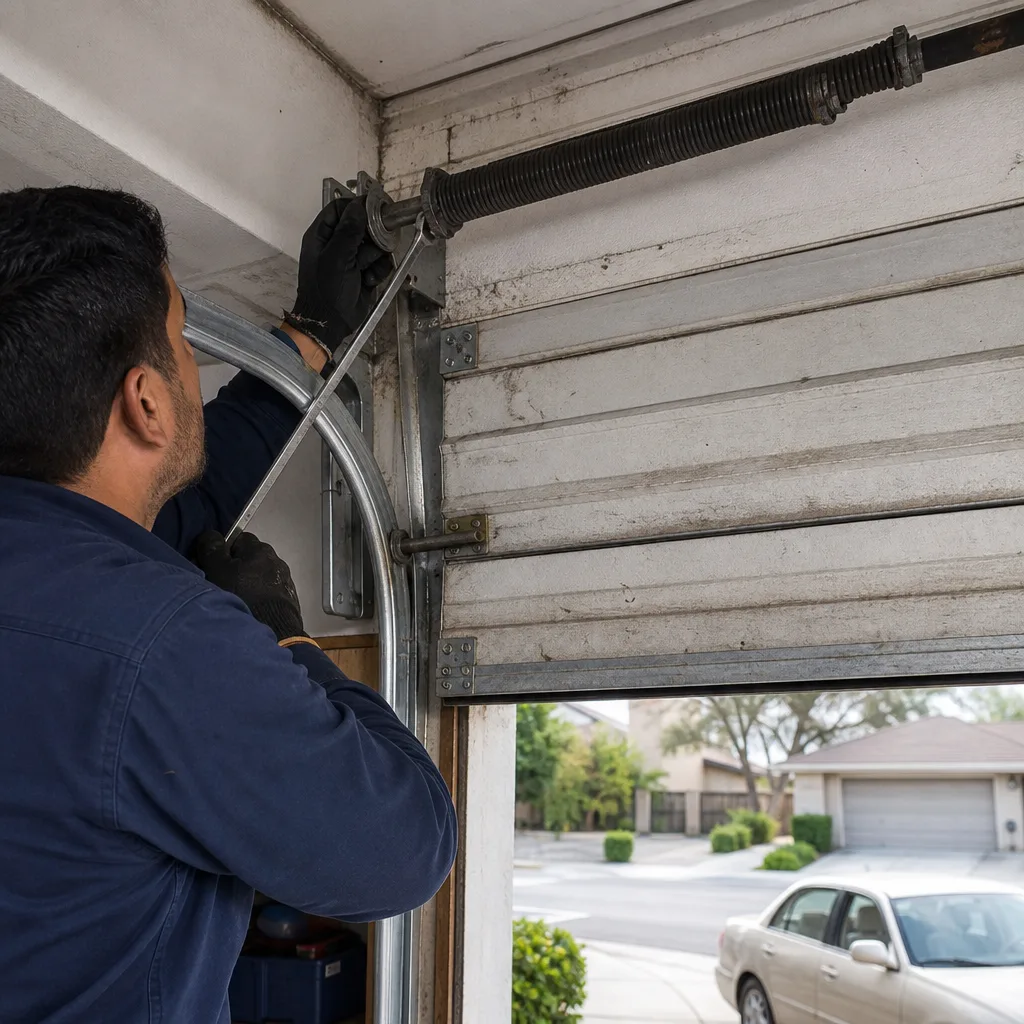 Before
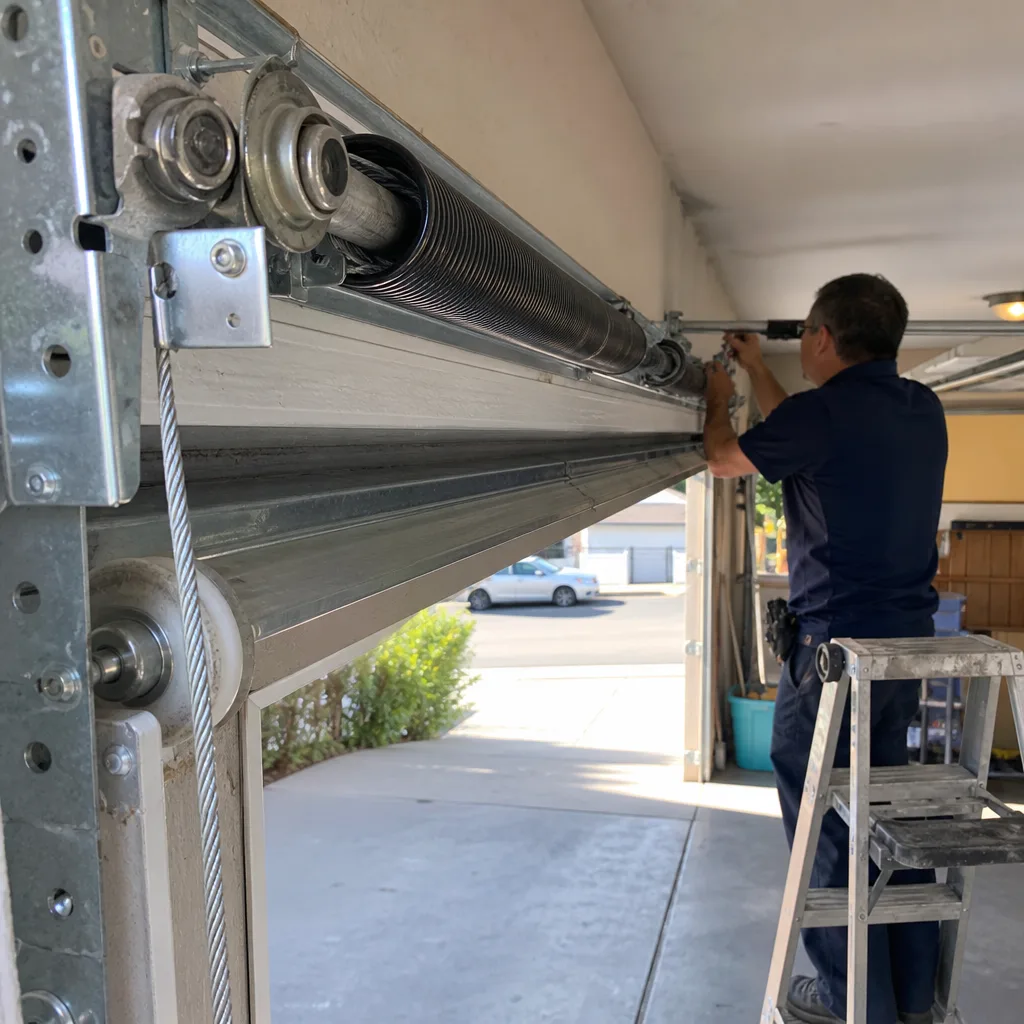 After
After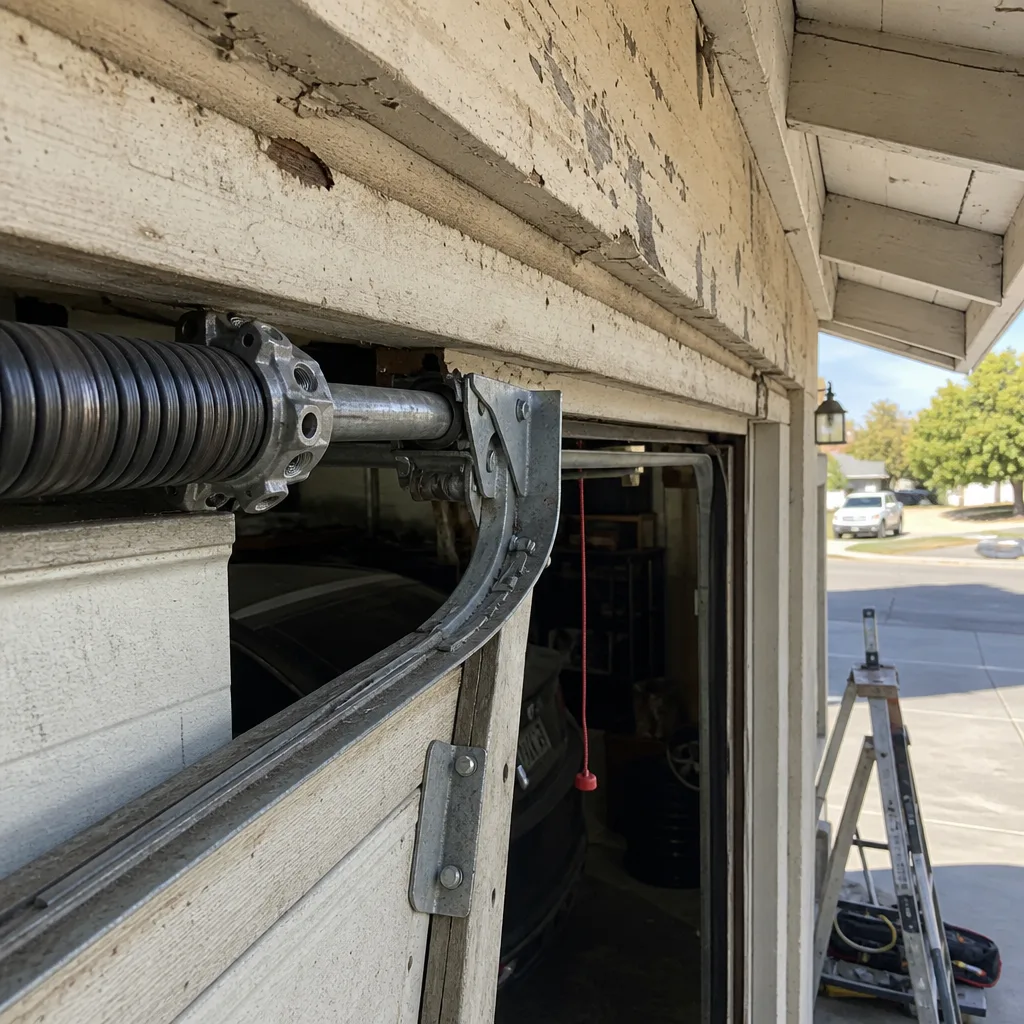 Before
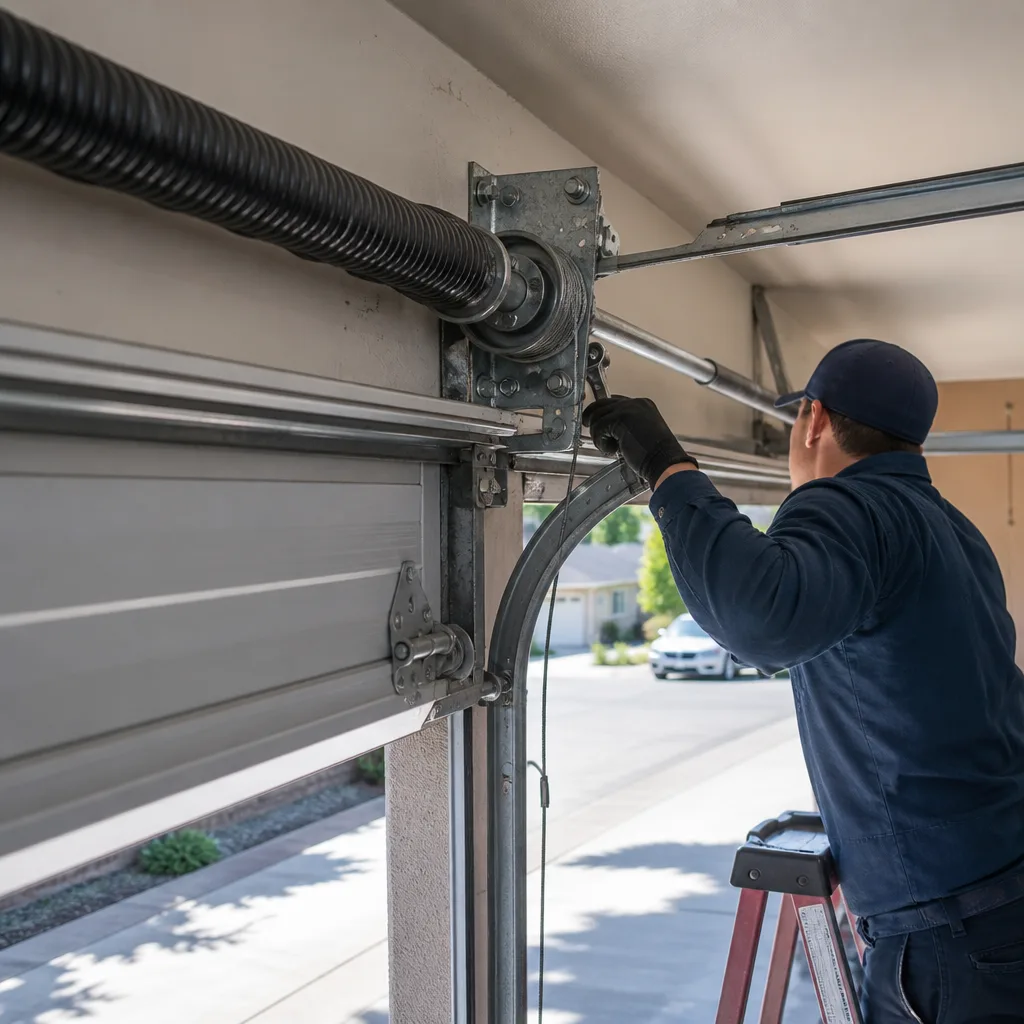 After
AfterGarage Door Warning Signs: A Santa Clarita Homeowner’s Reference Guide
Most garage doors in Santa Clarita don’t fail without warning. They fail because the warning signs were misread, dismissed, or drowned out by the noise of daily life. In our 42 years of service, we’ve found that the homeowner who calls early spends a fraction of what the homeowner who waits pays - not because the repair is smaller, but because catching a balance issue before it burns out a LiftMaster opener, or spotting cable fray before it snaps, prevents the cascade of secondary damage that turns a $200 fix into a $1,400 replacement. This guide - alongside our Complete Guide to Garage Door in Santa Clarita - sorts every symptom into three clear action tiers so you know when to stop, when to schedule, and when to simply watch.
Quick Answer
Garage door warning signs fall into three severity levels: stop using immediately for broken springs, snapped cables, or doors that won’t stay open; schedule within two weeks for slow operation, new noises, or intermittent reversing; monitor and log for minor weatherstripping wear or cosmetic panel damage. The key is matching the symptom to the correct timeline - treating every issue as equally urgent leads to unnecessary emergency calls, while ignoring the wrong sign can strand your car or damage your opener.
Table of Contents
- The Tiered Severity Index: 15 Warning Signs Ranked
- Sound Diagnostics: What Each Noise Means Mechanically
- The Slow Door Test: Finding the Source in Two Minutes
- Santa Clarita Climate Damage: What to Look For
- How to Photograph and Describe Symptoms for Phone Estimates
- Common Mistakes to Avoid
- When to Call a Professional
- Frequently Asked Questions
The Tiered Severity Index: 15 Warning Signs Ranked
Not every warning sign demands the same response. We’ve organized the symptoms we see most often in Santa Clarita homes into three tiers based on safety risk, potential for secondary damage, and how quickly the situation typically deteriorates.
Tier 1: Stop Using Immediately
These conditions present active safety hazards. Disconnect the opener using the red emergency release cord and call for service before operating the door again.
- Broken torsion spring. You’ll hear a loud bang, often mistaken for a car backfiring. The door will feel impossibly heavy or won’t open more than a few inches. In Santa Clarita’s dry heat, springs fatigue faster than in coastal climates - we’ve replaced springs in Saugus homes that were only seven years old. Never attempt to open a door with a broken spring; the full weight transfers to the opener and cables, and the door can crash without warning.
- Frayed or separated lift cable. Look for unwinding strands, rust blooms, or gaps where the cable wraps around the drum. A snapped cable releases spring tension unevenly, causing the door to drop on one side or slam shut. This is particularly dangerous with older wooden doors in Canyon Country that can weigh 300 pounds or more.
- Door that won’t stay open halfway. Release the opener and lift manually. If the door drifts down, the springs are no longer counterbalancing properly. The opener is now doing the spring’s job, and the motor or drive gear will fail soon - usually at the most inconvenient moment.
- Visible track separation or roller derailment. A door running on bent track or missing rollers is unstable. It can jump the track entirely, damaging the door, your vehicle, or anything stored nearby.
- Opener motor smoking or smelling electrical. This indicates overheating from overload or internal failure. Unplug the unit. The risk of fire is real, and continued operation can damage the logic board beyond repair.
Tier 2: Schedule Within Two Weeks
These symptoms won’t strand you today but are actively causing wear that compounds. Schedule during regular hours to avoid emergency rates.
- New grinding noise during operation. Usually indicates worn rollers, dry bearings, or a failing opener gear. The metal-on-metal contact generates heat and debris that accelerates wear on adjacent components. In our experience, grinding that starts in January becomes a breakdown by March.
- Door reversing before fully closing. Nine times out of ten, this is not a sensor problem. It’s a balance problem. The door is too heavy for the opener to pull through its full cycle, so the motor’s force sensor triggers reverse as a safety measure. The opener is absorbing load it was never engineered to carry, and the motor is the next thing to go. We’ve replaced dozens of Chamberlain and Genie openers in Valencia that failed prematurely because the underlying balance issue was never addressed.
- Intermittent remote or wall button response. Could be failing logic board, degraded wiring, or antenna issues. The pattern matters: fails only in hot weather suggests board thermal failure, common in uninsulated Santa Clarita garages that reach 110 degrees in summer.
- Sagging or uneven door in the open position. Indicates failing spring tension on one side, worn end bearings, or a twisted door section. The imbalance worsens quickly and stresses the opener.
- Worn or cracked weatherstripping with light visible around door edges. Allows dust, Santa Clarita’s fine valley sand, and pests into the garage. Also reduces insulation value. Not urgent, but the seal protects the bottom of the door from moisture contact that accelerates rust.
Tier 3: Monitor and Log
These conditions merit observation but don’t require immediate service. Log changes to help your technician spot trends.
- Minor surface rust on hardware. Santa Clarita’s low humidity means rust here is usually from condensation in early morning hours, not chronic moisture. Note location and progression. Surface rust on hinges is cosmetic; rust on cables or bottom fixtures is Tier 1.
- Faded or chalking paint on door panels. UV degradation in our high-sun climate. Protects steel from corrosion but doesn’t affect operation. Repaint when convenient.
- Slight slowing over years of operation. Normal aging if gradual. Compare to your memory from six months ago. Sudden slowing is Tier 2.
- Remote requiring closer proximity to work. Likely weak battery or interference. Replace battery first. If persists, log whether the issue correlates with time of day - some Santa Clarita neighborhoods experience periodic interference from utility equipment.
- Minor dents or dings in lower door sections. Cosmetic unless they affect panel alignment or track clearance. Photograph and measure depth.
Sound Diagnostics: What Each Noise Means Mechanically
Homeowners often describe a door as “noisy” without distinguishing what kind of noise. The specific sound points to specific components, and matching them correctly saves diagnostic time and money.
Grinding
A low, continuous grinding during opening or closing indicates metal rollers worn to their steel stems, or dry steel hinges rubbing against the track. The sound is mechanical and rhythmic, matching door speed. In Santa Clarita’s dusty environment, grit accelerates roller wear - we’ve found steel rollers in Sand Canyon homes ground flat after only five years. Nylon rollers eliminate this entirely and run quieter, though they still need inspection for cracking.
Popping
A sharp pop or snap, often once per cycle, usually comes from a section hinge binding and releasing, or a roller sticking in the track and breaking free. This is a sign of misalignment or inadequate lubrication at the hinge pin. Left unaddressed, the repeated stress cracks the hinge or bends the track. Popping that occurs at the same point in every cycle is easiest to diagnose - note whether it’s on the way up or down, and which door section passes the opener rail at that moment.
Squealing or Screeching
High-pitched squeal points to dry bearings in rollers or end bearings on the torsion tube. The sound is friction-based and often worsens in cold mornings before thinning as the day warms. A proper lubricant - silicone-based for nylon rollers, lithium grease for steel - quiets this immediately. WD-40 is not a lubricant for this application; it’s a solvent that evaporates and leaves metal bare.
Rhythmic Clicking
A regular click-click-click matching door movement indicates a roller with a flat spot or chipped bearing, hitting the track joint at each rotation. Or, in chain-drive openers, a worn sprocket allowing the chain to skip teeth. The rhythm is diagnostic: faster clicking means smaller diameter component, slower means larger. We’ve traced clicking in Newhall homes to loose chain tension that let the chain slap the rail - a five-minute adjustment that prevented sprocket replacement.
Rattling or Shaking
Loose hardware. Track bolts, opener mounting brackets, or door hardware have worked free from vibration. The fix is straightforward tightening, but the underlying cause matters - excessive vibration from unbalanced operation will loosen hardware again. We check balance on every rattling door we service in Santa Clarita.
The Slow Door Test: Finding the Source in Two Minutes
A slow-moving door is not an aesthetic annoyance. It’s a diagnostic finding that reveals whether the problem is the door, the opener, or the interaction between them. Here’s the two-minute test we teach homeowners to perform before calling.
Step 1: Disconnect the Opener
Pull the red emergency release cord. This disengages the opener trolley from the door. The door should now move freely by hand.
Step 2: Test Manual Operation
Lift the door from closed to fully open. A properly balanced door requires about 10 pounds of force - roughly the weight of a bowling ball. It should move smoothly, stay open at waist height, and not drift up or down. If the door is heavy, sticks, or won’t stay put, the problem is in the door system: springs, cables, rollers, or track.
Step 3: Test the Opener Alone
With the door disconnected, run the opener through a full cycle using the wall button. The trolley should travel smoothly at consistent speed. Grinding, straining, or uneven movement here indicates an opener problem: worn gear, failing capacitor, or motor issue.
Step 4: Interpret the Results
- Door heavy, opener runs fine: Spring or cable issue. Schedule service. Continuing to use the opener will burn out the motor.
- Door moves well, opener struggles: Opener problem. May need gear replacement or unit replacement if older.
- Both feel wrong: Likely long-term neglect with multiple worn components. Expect a more thorough repair or replacement evaluation.
In Santa Clarita’s older neighborhoods like Valencia’s original 1960s tracts, we see this pattern frequently: a door that was never properly balanced from installation, with an undersized opener that has been overworking for fifteen years. The homeowner thinks the opener failed, but the root cause was the balance. Replacing the opener without fixing the balance means the new unit fails prematurely too. We always run this test before quoting any opener replacement.
Santa Clarita Climate Damage: What to Look For
Santa Clarita’s climate creates specific wear patterns that differ from coastal or desert regions. Understanding these helps distinguish normal aging from climate-accelerated failure.
UV and Dry-Heat Degradation
Our 280-plus days of annual sun and low humidity attack materials differently than moisture-rich climates. On cables, UV degradation appears as a dry, dusty surface with fine longitudinal cracking - the steel strands look “thirsty” rather than rusty. The cable feels stiff and doesn’t flex smoothly around the drum. This is common on south-facing garage doors in Stevenson Ranch and Sand Canyon, where afternoon sun bakes the exterior hardware.
On rubber components - weatherstripping, opener belts, trolley bumpers - UV causes hardening and shrinkage. The material cracks when flexed rather than tearing. A belt-drive opener in direct sun may need belt replacement years earlier than the manufacturer’s estimate.
Moisture Corrosion vs. Dry Corrosion
Santa Clarita’s occasional heavy rains, particularly during atmospheric river events, create brief periods of high moisture that catch homeowners off guard. Moisture corrosion on cables and bottom fixtures appears as orange, flaky rust with pitting. It concentrates where water pools or drips. Dry-heat degradation, by contrast, is uniform across exposed surfaces.
The distinction matters for timing. Moisture corrosion can progress to structural failure within a single wet season if drainage is poor. We’ve replaced cables in Canyon Country homes where a clogged garage floor drain allowed standing water after one January storm. Dry-heat degradation is more predictable - we can estimate remaining life based on exposure hours.
Thermal Cycling Stress
Santa Clarita’s temperature swings - 50 degrees some nights, 95 by afternoon in spring and fall - cause repeated expansion and contraction in metal components. Hinge bolts loosen. Track mounting brackets fatigue. Torsion springs experience additional stress cycles. Doors in uninsulated garages, common in older Valencia and Newhall construction, see the most dramatic swings. We recommend checking all visible hardware seasonally - our Seasonal Garage Door Care for Santa Clarita: Year-Round Homeowner’s Guide offers a full schedule - particularly after the first heat wave of spring.
Dust and Grit Infiltration
Our valley location means fine dust settles on every horizontal surface, including track interiors and roller bearings. This abrasive mix accelerates wear. A door that sounds progressively grittier through summer often needs cleaning and lubrication before fall. We include track cleaning in our Garage Door Repair in Santa Clarita service calls - it’s a detail that prevents callbacks.
How to Photograph and Describe Symptoms for Phone Estimates
A clear description and good photographs let us provide accurate phone estimates without charging for a diagnostic visit. This saves time and lets you compare options calmly. Here’s how to document effectively.
Photography Guidelines
- Wide shot of the full door. Stand across the street or driveway. Include the frame, header, and both tracks. This shows alignment, panel condition, and installation type.
- Close-up of the symptom area. Fill the frame. Use your phone’s focus lock by holding your finger on the subject. Turn on flash if shadows obscure detail.
- Track and roller detail. Photograph where the door sits in the track at its normal closed position, and at the curved transition to horizontal if accessible. Roller condition and track wear are visible here.
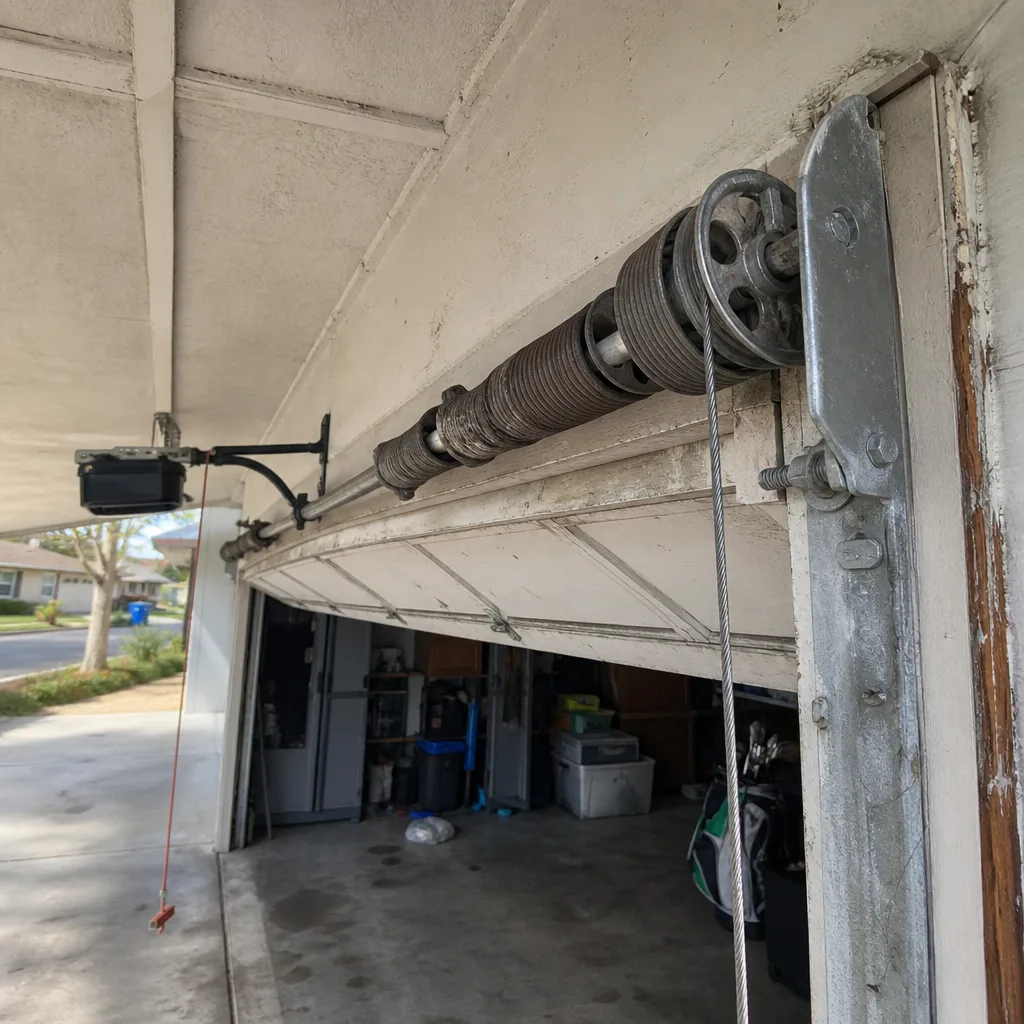
- Spring and cable assembly. Only if safely accessible - do not climb or reach into the spring area. From the floor, photograph the torsion tube across the header and the cable drop from drum to bottom fixture.
- Opener model plate. Usually on the side or back of the motor unit. Include manufacturer, model number, and date code. This tells us parts availability and typical failure modes.
Description Framework
Use this structure when calling:
- When it started: “Three days ago” vs. “Gradually over six months” changes the diagnosis significantly.
- What changed: Specific symptom, when it occurs in the cycle, and whether it’s consistent or intermittent.
- What you’ve tried: Including lubricants, adjustments, or resets - so we don’t duplicate effort or miss a clue.
- Age of door and opener: Installation date if known, or approximate decade based on home construction or memory.
- Previous repairs: What was done and when. A spring replaced three years ago failing again suggests an underlying issue.
With good documentation, we can often quote spring replacements, cable repairs, and opener replacements accurately enough that the final invoice matches the phone estimate. Our Mainspring Garage Door Co. home page has a direct upload option if you prefer sending photos before calling.
Common Mistakes to Avoid
- Ignoring a reversing door. In Santa Clarita’s competitive resale market, some homeowners live with a door that reverses three times before closing, treating it as a quirk. It’s not. The opener is failing under load, and the repair bill grows with every cycle.
- Using the wrong lubricant. WD-40, cooking oil, and motor oil all damage garage door components. WD-40 strips existing lubrication. Cooking oil gums and attracts dust. Motor oil drips onto vehicles and concrete. Use silicone spray for nylon rollers and tracks, lithium grease for steel hinges and bearings.
- Testing a broken spring by lifting manually. Even strong homeowners underestimate a 200-pound door without spring assist. The door can slip, causing back or hand injury. If you suspect spring failure, disconnect the opener and leave the door closed until service arrives.
- Replacing only one spring on a two-spring door. Springs are matched pairs. The old spring has cycled thousands of times and has different tension characteristics than a new spring. Mismatch causes uneven wear, door binding, and premature failure of the new spring. We always replace torsion springs in pairs.
- Assuming all grinding needs a new opener. Many Santa Clarita homeowners have replaced fully functional openers when the noise was simply dry rollers or a loose chain. Run the slow door test before shopping for new units.
- Waiting for “both springs to go.” When one spring breaks, the second is carrying full load and is near its own failure point. The cost of a second service call exceeds the incremental cost of replacing both now.
- Neglecting seasonal inspection after weather events. Santa Clarita’s Santa Ana winds and occasional heavy rains stress doors differently than normal operation. Check hardware after significant weather. A ten-minute walk-around prevents a weekend emergency.
When to Call a Professional
Call when any Tier 1 symptom appears, when a Tier 2 symptom persists beyond a week, or when your own testing reveals a balance or opener problem you can’t explain. The cost of a service call is modest compared to replacing an opener damaged by continued operation, or worse, a door that falls on a vehicle or person.
Specific scenarios that warrant immediate professional attention - as detailed in our How to Hire a Garage Door Contractor in Santa Clarita: A Step-by-Step Guide - include any spring or cable work (these components store lethal energy and require specialized tools and training); doors that have come off track entirely; opener electrical issues involving burning smell or tripped breakers; and any situation where the door’s behavior has changed suddenly without obvious cause.
Mainspring Garage Door Co. offers free estimates in Santa Clarita - call (661) 384-8741. Our technicians arrive with springs, cables, rollers, and openers for all major brands on the truck, so most jobs finish in a single visit. The price is stated upfront before any work begins, and every job carries our 90-Day Done Right Promise in writing.
Frequently Asked Questions
Most common repairs range from $180 to $450, with spring replacements typically at the higher end and roller or sensor adjustments at the lower. The exact price depends on door size, spring type, and whether secondary damage has occurred. We provide firm quotes after inspection, and our written estimate is the price you pay - no surprises on the bill. Call (661) 384-8741 for a free estimate.
Yes, in most cases. Noise from dry rollers, loose hardware, or minor track issues resolves in under an hour with proper lubrication and adjustment. We carry replacement rollers, hinges, and bearings on every truck, so if worn parts are the cause, we fix it during the same visit. Same-day service is available throughout Santa Clarita, including Valencia, Saugus, and Canyon Country.
Nine times out of ten, this is a balance problem, not a sensor problem. The door is too heavy for the opener to complete its closing cycle, so the force sensor triggers reverse as a safety measure. The opener is absorbing load it was never designed for, and the motor will fail prematurely if the balance isn’t corrected. Run the manual lift test described above - if the door feels heavy, schedule spring service.
Standard torsion springs are rated for 10,000 cycles (roughly 7-10 years of typical use). In Santa Clarita’s dry heat and temperature-cycling environment, we’ve seen springs fatigue faster, particularly on south-facing doors and in uninsulated garages. High-cycle springs rated for 25,000-50,000 cycles are available and often worthwhile for homes where the garage is the primary entry point.
Replace if the unit is over 15 years old, uses a discontinued drive system, or has suffered motor or logic board failure. Repair if the issue is isolated - worn gear, bad capacitor, or sensor misalignment - and the unit is a current or recent model. We factory-service LiftMaster, Chamberlain, Genie, and other major brands, so parts availability often determines the recommendation. Our Garage Door Opener in Santa Clarita page details current models and features.
Our trucks are stocked with springs, cables, rollers, hinges, and openers compatible with Clopay, Amarr, Wayne Dalton, and all other major manufacturers. For older or custom doors, we source parts within 24 hours. In 42 years, we’ve yet to encounter a door we couldn’t service. For new Garage Door Installation in Santa Clarita, we recommend Clopay and Amarr for their durability in our climate.
The Bottom Line
Garage doors talk before they fail. The grinding, the slowing, the reversal before closing - these are specific mechanical signals with specific meanings and specific response windows. The homeowner who learns to read them saves money not by avoiding service, but by calling at the right time with the right information. In Santa Clarita’s climate, with its UV, dust, and thermal cycling, proactive attention pays particular dividends. Document what you see. Run the two-minute test. Match symptoms to tiers. For more guides & resources, explore our blog, and when you’re uncertain, call before the uncertainty becomes an emergency.
Written by Carl Dutton, Owner at Mainspring Garage Door Co., serving Santa Clarita since 2016.