
Last updated September 10, 2026
Full 25-point door and opener safety check with every visit - springs, cables, rollers, tracks, and your LiftMaster or Chamberlain opener included
You get a price before we start. It does not change when the truck arrives.
 Before
 After
After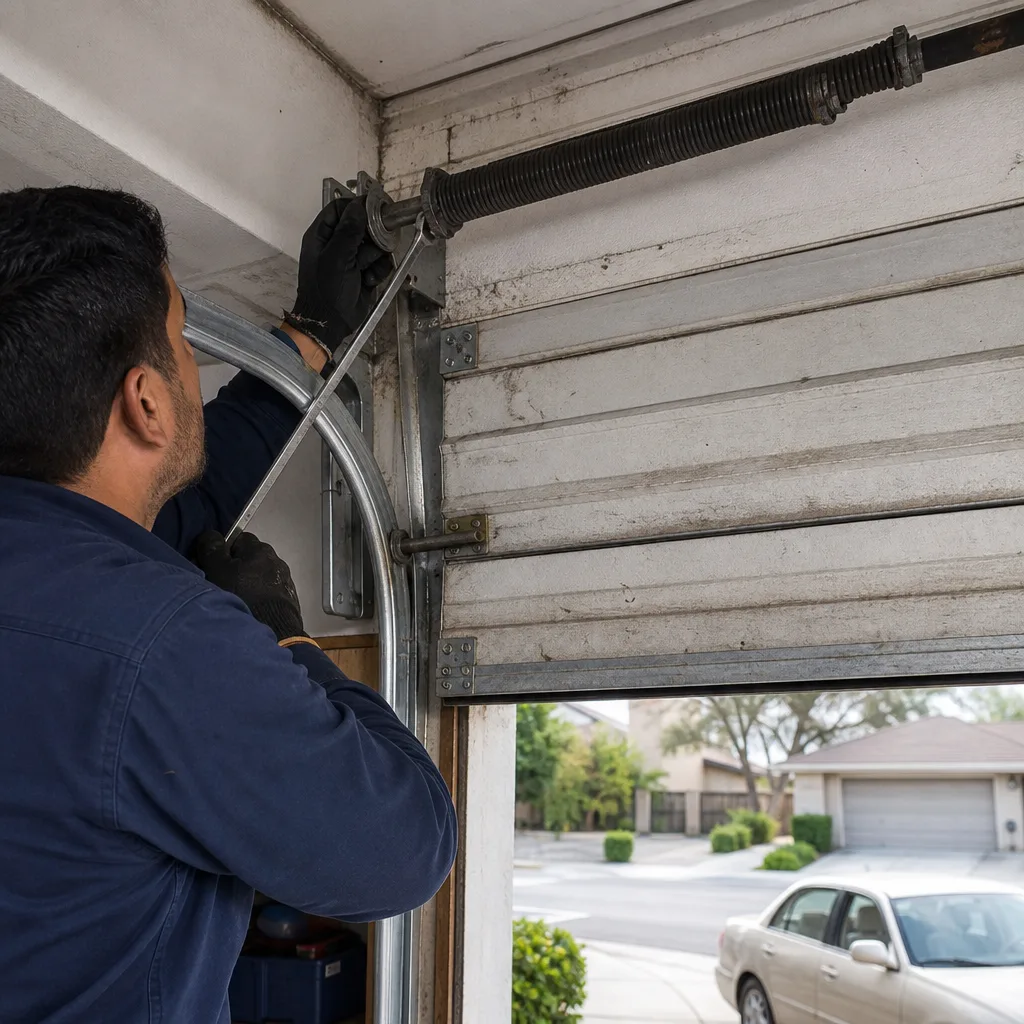 Before
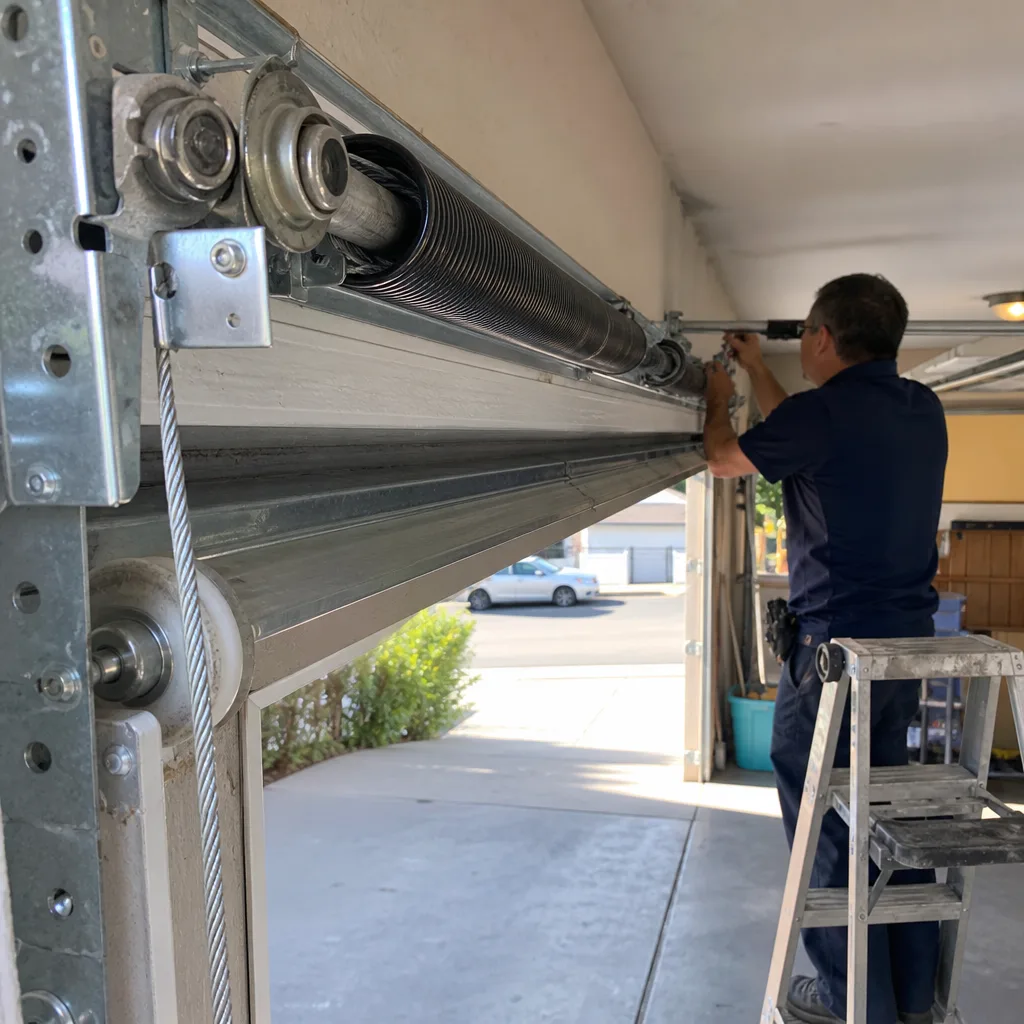 After
After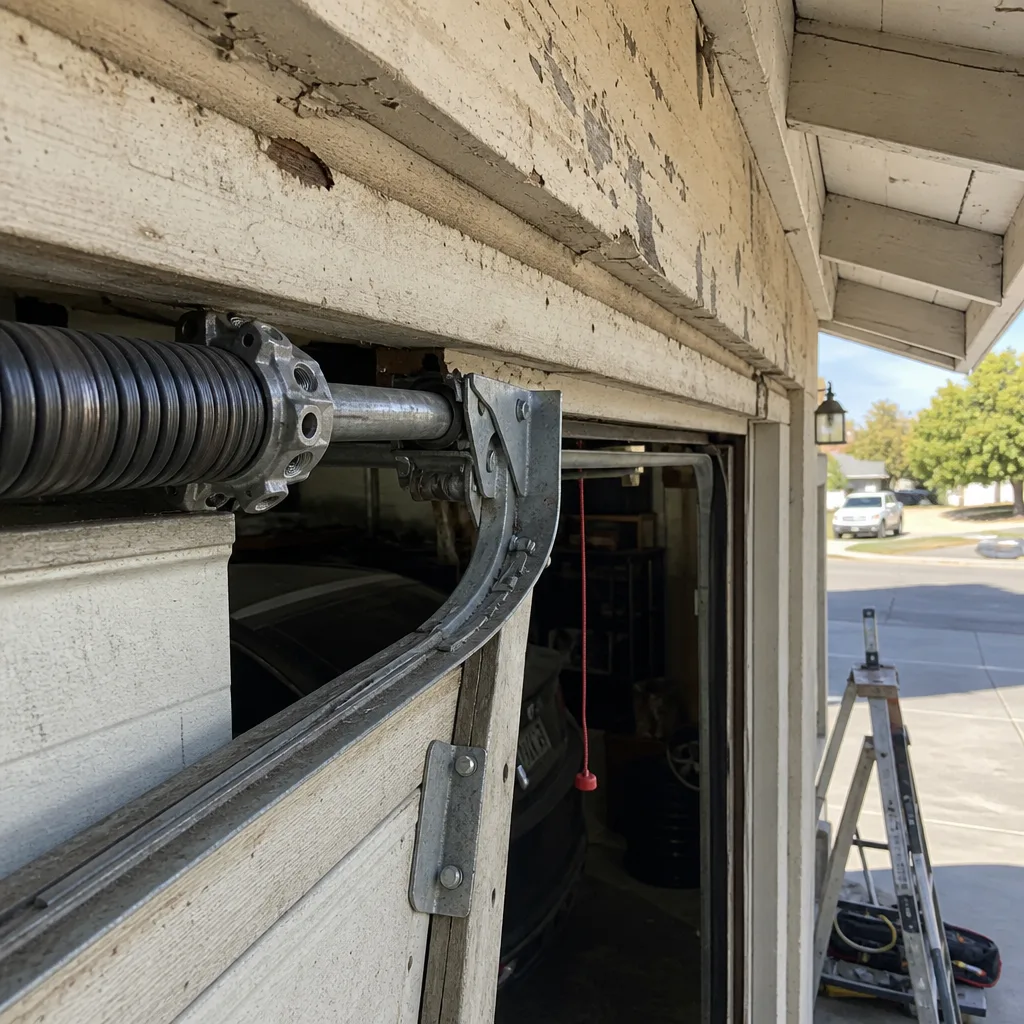 Before
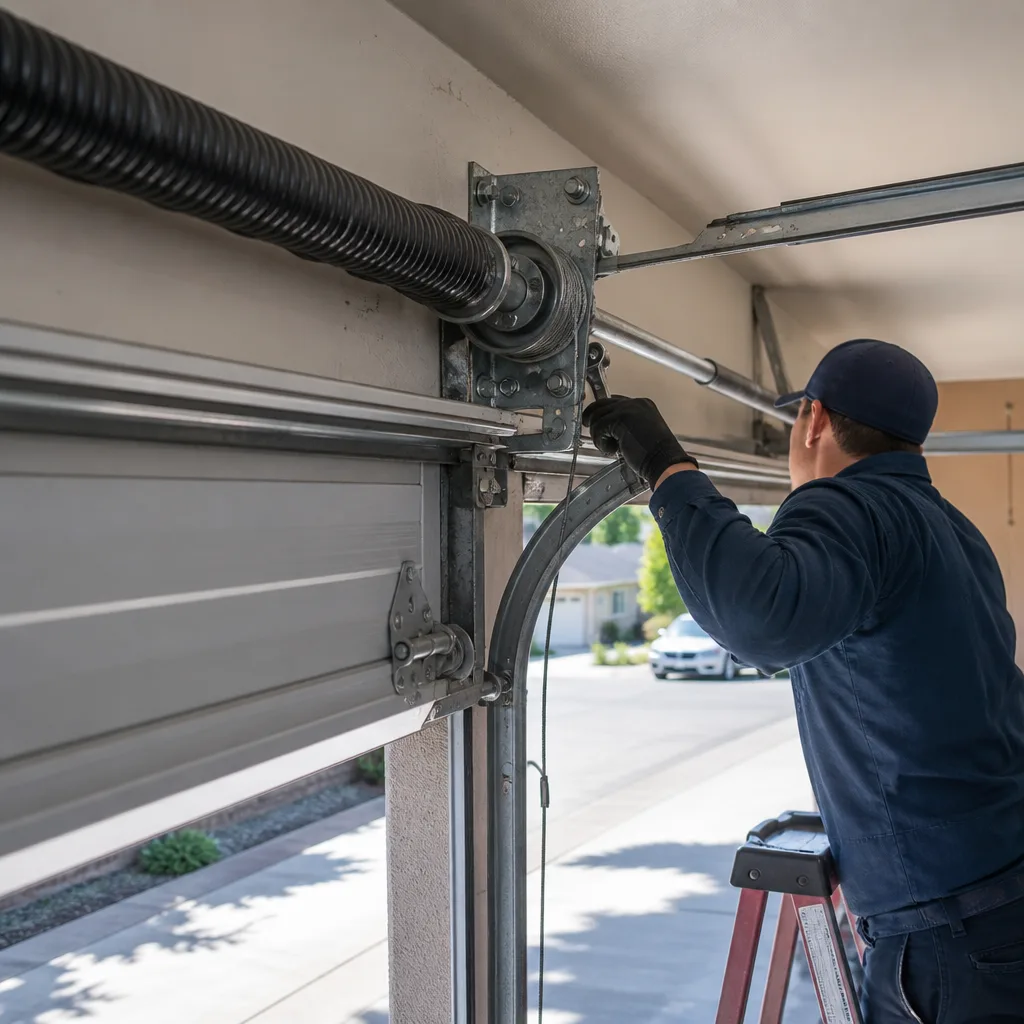 After
AfterSeasonal Garage Door Care for Santa Clarita: Year-Round Homeowner’s Guide
October’s first cold snap is when Santa Clarita garage doors break. Not July. Not the rainy week in February. The week when nighttime temperatures plunge twenty-five degrees and metal contracts overnight while spring tension stays calibrated for summer. We’ve been called out to Valencia Ranch, Saugus, and Canyon Country at 6 a.m. on those mornings for forty-two years, and the pattern never changes. This guide replaces generic “spring and fall checkup” advice with tasks timed to Santa Clarita’s actual climate calendar - the Santa Ana winds, the thermal expansion of July, the fire-season ember gaps, and the single January task that prevents March emergency calls. For The Complete Guide to Garage Door in Santa Clarita, see our full resource.
Quick Answer
Garage door maintenance in Santa Clarita should follow four local stress periods rather than traditional seasons: October cold snaps for spring tension checks, May-June for pre-fire-season weatherstripping inspection, July-August for heat-expanded track clearance, and post-Santa-Ana cleanup for track and roller grit removal. A basic seasonal routine - visual inspection, lubrication of moving parts, and weather seal check - takes twenty minutes and prevents most emergency failures.
Table of Contents
- October Cold Snap: The Hidden Spring Danger
- Pre-Fire Season Protocol (May-June)
- Summer Heat and Track Binding
- Post-Santa-Ana Cleanup
- The January Task Most Homeowners Skip
- Year-Round Maintenance Basics
- Common Mistakes to Avoid
- When to Call a Professional
- Frequently Asked Questions
October Cold Snap: The Hidden Spring Danger
The Santa Clarita Valley cools fast. One week you’re running the AC at midnight; the next, you’re pulling blankets off the shelf. That temperature drop shrinks steel. A torsion spring calibrated to 10,000 cycles at summer temperatures wakes up to metal that has contracted by thousandths of an inch - enough to alter the coil’s resting tension and stress the set screws.
We’ve replaced more springs in the second week of October than any other seven-day window. In 2023, we logged calls from Sand Canyon, Bouquet Canyon, and the older tract homes near Soledad Canyon Road where original springs from the 1980s finally gave out. The cold didn’t kill them alone. It was the sudden change after months of thermal stability.
What to check in early October:
- Listen for pitch changes. A spring losing tension sounds different when the opener engages. If the motor labors where it once hummed, the spring may be unevenly loaded.
- Check door balance manually. Disconnect the opener and lift the door halfway. It should stay put. If it drifts down, the spring is fatigued. If it shoots up, tension is too high for the current metal state. Either condition stresses cables and rollers through winter.
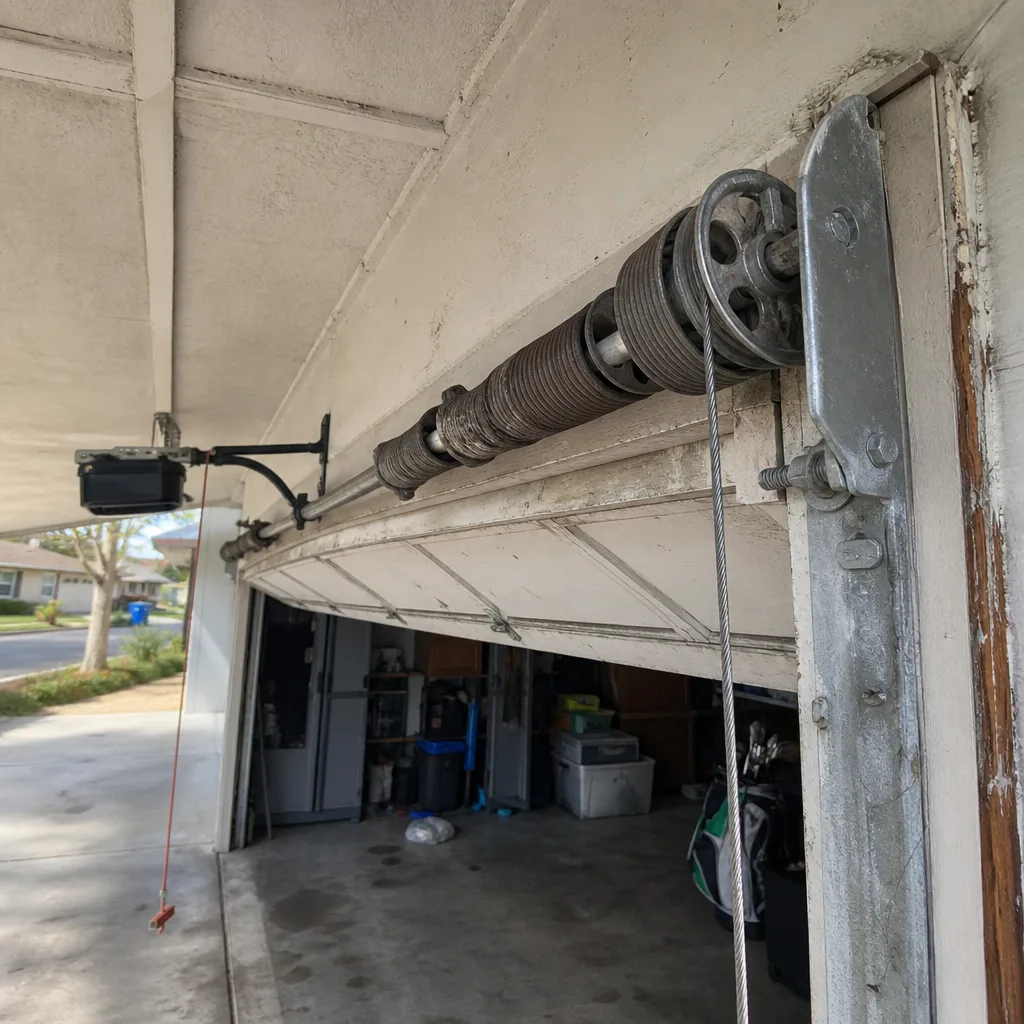
- Inspect spring coils for gaps. A properly tensioned torsion spring has coils that sit nearly touching. Gaps between coils indicate the spring has stretched and lost torque. This is not a DIY adjustment. Torsion springs store lethal energy. A broken spring or slipped winding cone can cause serious injury or death.
We do not recommend homeowners adjust their own torsion springs. The garage door repair in Santa Clarita that we provide includes spring inspection as part of our $89 Seasonal Tune-Up, and we carry replacement springs for Clopay, Amarr, Wayne Dalton, and most other major brands on every truck. Most spring replacements in Santa Clarita are completed in a single visit because our technicians arrive with the correct wire size and length already measured against local inventory.
One more October note: if your garage faces north or sits in a Canyon Country canyon shadow, the temperature swing hits harder. Metal in shade cools faster than metal in sun. We’ve seen five-year springs fail in north-facing garages while identical springs on south faces last twelve. Location within Santa Clarita matters.
Pre-Fire Season Protocol (May-June)
Fire season in the Santa Clarita Valley starts when the chaparral dries and the Santa Ana wind patterns return. The National Weather Service typically flags Red Flag conditions between May and November, with peak danger in September and October. But the preparation that protects your garage - and potentially your home - belongs in May and June, before the critical period.
The gap beneath your garage door is an ember intrusion point. Standard bottom weatherstripping compresses, cracks, or pulls away from the retainer over time. A quarter-inch gap doesn’t sound like much until you consider that embers can travel a mile ahead of a fire front and enter structures through openings smaller than a dime.
Pre-fire-season inspection steps:
- Remove and inspect the bottom seal. Most Santa Clarita homes built between 1970 and 2000 use a vinyl or rubber U-shaped retainer with a replaceable seal. Pull the old seal out. If it’s cracked, hardened, or has flat spots where it no longer springs back, replace it. The retainer itself should be firmly screwed to the bottom of the door panel. We’ve found loose retainers on homes throughout Newhall and Valencia where vibration from daily cycling worked screws loose.
- Check the threshold seal. If your garage has a rubber threshold strip glued to the concrete, test the bond. Santa Clarita’s summer heat softens adhesive. A threshold that peels up creates a ramp for wind-driven embers and an entry point for rodents seeking cooler ground.
- Verify side and top weatherstripping. The vinyl or brush seals on the jambs and header compress over years of contact. In Santa Clarita’s dry climate, vinyl becomes brittle faster than in humid regions. Cracked jamb seals whistle during Santa Ana events - that’s your audible signal that the seal has failed.
- Clear the five-foot perimeter. This is not garage door mechanics, but it matters. Combustible material against the door or frame transfers heat and provides fuel. The Santa Clarita Fire Safe Council recommends defensible space extending from the structure. We add: keep that space clear of items that could block emergency egress if the door fails during an evacuation.
After the 2019 Saddleridge Fire and the 2020 Lake Fire, we saw a surge of calls from Santa Clarita homeowners who had never considered their garage door as part of fire preparedness. The ones who had maintained seals and clearances had less smoke intrusion and less thermal damage to door components. It’s a square deal: twenty minutes in May, versus potential replacement of the entire door and opener system after a fire event. Not sure whether to DIY or call a pro? Read our DIY vs Professional Garage Door: The Santa Clarita Homeowner’s Decision Guide.
Our $89 Seasonal Tune-Up includes weatherstripping inspection and replacement recommendations. We carry common seal profiles for Genie and other major brands, and we can source Clopay and Amarr factory seals for newer installations.
Summer Heat and Track Binding
July in Santa Clarita routinely hits 105°F. Steel garage door tracks expand in that heat. A standard 2-inch residential track on a 16-foot-wide door can lengthen by an eighth of an inch from morning to afternoon. That doesn’t sound significant until you understand how tracks are mounted.
Tracks are not rigidly fixed to the wall. They’re held by brackets with slotted holes specifically to allow thermal movement. When those slots are clogged with paint, corrosion, or debris, the track can’t slide. It bows inward. The rollers bind. The opener strains. In extreme cases, the door jumps the track entirely.
We’ve responded to summer track-binding calls across Santa Clarita, particularly in homes with dark-colored doors on west-facing garages. A dark steel door surface can reach 150°F. The heat radiates into the track system. In Valencia’s newer developments with minimal eave overhang, this effect is pronounced.
Summer heat management:
- Check track bracket fasteners quarterly. The bolts should be snug but not torqued to immobility. If you see paint bridging the bracket and track, scrape it clear. The slot is there for a reason.
- Verify lateral clearance. Rollers need 1/4 to 1/2 inch of play between the track and the door edge. Summer expansion reduces this margin. Do not attempt to bend tracks or force clearance with tools. Misaligned tracks cause uneven wear and can void opener warranties. Wayne Dalton and other manufacturers specify that track adjustment by unqualified persons voids coverage.
- Listen for the warning sounds. A binding door groans at the same point in every cycle. The opener motor heats up and may trigger thermal protection, shutting down mid-cycle. If your Genie or LiftMaster opener stops and flashes error codes on a hot afternoon, track binding is a likely cause.
- Consider door color and orientation. If you’re planning garage door installation in Santa Clarita, light colors and adequate overhang reduce thermal load. We discuss this with every homeowner during measurement. It’s not an upsell. It’s physics.
One caution we repeat every summer: do not lubricate tracks. Oil or grease on tracks attracts dust, which forms an abrasive paste. Rollers should be lubricated at their bearings. Tracks should be clean and dry. We’ve replaced rollers prematurely on Santa Clarita doors where well-meaning homeowners sprayed WD-40 on the entire system.
If your door binds consistently above 100°F, call for adjustment. Track realignment is precise work. Our technicians use laser levels and manufacturer specifications. The flat price is stated before any work begins, and the adjustment is covered by our 90-Day Done Right Promise.
Post-Santa-Ana Cleanup
The Santa Ana winds arrive without warning, sometimes at 3 a.m., sometimes at noon. They carry fine grit from the Angeles National Forest, construction dust from active developments, and pollen from the valley’s chaparral. This material deposits in garage door tracks, roller stems, and hinge pins. Left alone, it acts as grinding compound.
We’ve opened track systems in Stevenson Ranch and Castaic after major wind events to find packed dust reducing roller clearance by half. The rollers still roll, but they vibrate. The vibration loosens fasteners. Loose fasteners shift alignment. Shifted alignment causes uneven wear. It’s a cascade that starts with dust.
Post-wind-event cleaning procedure:
- Close the door and disconnect power to the opener. This prevents accidental activation while you’re working in the track path.
- Vacuum the track interior. Use a narrow nozzle and work top to bottom. Do not use compressed air - it drives particles deeper into roller bearings and hinge barrels.
- Wipe tracks with a dry cloth. If residue persists, dampen the cloth with mineral spirits, not water. Santa Clarita’s hard water leaves mineral deposits. Dry the track thoroughly after cleaning.
- Inspect rollers for grit embedding. Nylon rollers, common on doors installed after 2005, have sealed bearings that resist dust. But the nylon wheel itself can embed grit and develop flat spots. Steel rollers show wear as polished tracks on the wheel circumference. Either condition warrants replacement.
- Check hinge pins for lateral play. Grasp a roller stem and move it perpendicular to the door. Excessive play means the hinge barrel is worn. A door with sloppy hinges racks during operation, stressing the opener rail and header bracket.
- Lubricate moving parts correctly. Apply white lithium grease to roller bearings, hinge pins, and spring coils. Use a silicone-based lubricant on the opener chain or screw, per manufacturer specification. One pump per point. Excess lubricant attracts the next round of dust.
- Cycle the door manually before reconnecting power. Feel for binding, listen for noise, verify smooth operation through the full travel.
In Santa Clarita’s wind-prone areas - particularly Sand Canyon and the northern edges of Canyon Country - we recommend this cleaning after every significant Santa Ana event, not just annually. The time investment is thirty minutes. The cost of neglected maintenance is a complete opener replacement, which our garage door opener in Santa Clarita service addresses, but which no homeowner wants to fund unexpectedly.
Our trucks carry replacement rollers, hinges, and bearings for all major brands. Most post-wind-event service calls in Santa Clarita are completed in a single visit because we stock the parts that fail predictably.
The January Task Most Homeowners Skip
Every January, regardless of the door’s age or your maintenance diligence, perform a full manual operation test. Disconnect the opener. Lift the door from fully closed to fully open. Lower it controlled. Repeat three times.
This test reveals problems that automatic operation conceals. A door that the opener lifts without apparent strain may require forty pounds of manual effort. A door that seems to close smoothly may accelerate in the last two feet, indicating spring tension imbalance. A door that drifts left or right during manual lift has cable length discrepancy or worn cable drums.
We’ve tracked our Santa Clarita service calls for two decades. Homeowners who perform this January test and call at the first sign of change rarely need emergency service. Homeowners who skip it call us in March, when the accumulated wear from holiday storage cycling - decorations, ski gear, tax documents - pushes a marginal component into failure.
What the January test checks:
- Spring balance. A properly balanced door stays at any position between knee and shoulder height. If it falls from waist height, the spring is weak. If it rises from waist height, tension is excessive. Both conditions strain the opener and create safety hazards if the opener’s force settings are improperly adjusted.
- Cable condition. Look for fraying, rust staining, or bird-caging (strand separation). Frayed cables fail without warning. In Santa Clarita’s dry climate, rust is less common than in coastal areas, but cable fatigue from cycle loading is universal.
- Roller operation. Each roller should turn freely in the track. A roller that slides rather than rolls indicates bearing failure or track contamination.
- Panel integrity. Steel doors develop seam separation at panel edges. Wood doors check and split at panel joints. Fiberglass doors delaminate. Catching these early prevents water intrusion during the rare but real Santa Clarita winter storms.
- Hardware tightness. Vibration loosens nuts and bolts. Check all visible fasteners with a socket wrench. Do not over-tighten - stripped threads are harder to fix than loose bolts.
The manual operation test takes ten minutes. It requires no tools beyond a socket set and the release rope on your opener. It is the single highest-value maintenance action a Santa Clarita homeowner can perform, and it costs nothing.
If the door fails any element of this test, call before it becomes an emergency. We answer live, 24/7, including holidays. A January appointment carries no urgency premium. A March emergency call, after the spring breaks at 6 a.m. with your car trapped inside, is a different experience.
Year-Round Maintenance Basics
Beyond the seasonal specifics, certain tasks belong on a recurring schedule regardless of calendar position. We’ve organized these by frequency based on Santa Clarita’s usage patterns - most valley homeowners cycle their door 3-5 times daily, above the national average due to attached garages and suburban commuting patterns.
Monthly:
- Visual inspection of cables, springs, and hardware from inside the garage with the door closed. Look for rust, fraying, or displacement.
- Test auto-reverse safety systems. Place a 2×4 flat on the floor where the door contacts it. The door should reverse within two seconds of contact. Test photoelectric sensors by passing a broom handle through the beam during closing.
- Listen for new noises. A change in sound precedes most mechanical failures by weeks.
Quarterly:
- Lubricate moving parts with appropriate products. White lithium grease for metal-to-metal contact. Silicone spray for plastic components and weatherstripping. Never use standard WD-40 as a lubricant - it’s a solvent and degreaser, not a lasting lubricant.
- Inspect weatherstripping for compression set and cracking. Santa Clarita’s UV exposure degrades vinyl faster than national averages.
- Check opener rail and header bracket for looseness. The rail supports the entire door weight during opener operation. A loose header bracket is a collapse hazard.
Annually:
- Professional inspection of spring tension and cable drum alignment. These are not homeowner-serviceable components.
- Opener force and limit setting verification. Modern LiftMaster and Chamberlain units have electronic controls, but the settings drift with component wear. Incorrect force settings damage the door and create crush hazards.
- Comprehensive hardware tightening and alignment check.
Our $89 Seasonal Tune-Up covers the annual professional inspection. We perform it with the door in your Santa Clarita garage, not on a checklist in our office. The technician explains findings before recommending any additional work. The price for the tune-up is fixed. If we find something that needs attention beyond the standard service, we quote it separately, in writing, before proceeding. No surprises on the bill.
Common Mistakes to Avoid
- Using the wrong lubricant on tracks. Oil or grease on tracks attracts Santa Clarita’s airborne dust and creates abrasive slurry. Tracks stay clean. Rollers and hinges get lubricant.
- Ignoring the release rope. That red handle is your manual override if the opener fails during a power outage or fire evacuation. Test it quarterly. We’ve found ropes rotted, tied up out of reach, or removed entirely by homeowners who found them unsightly.
- Adjusting opener force settings to compensate for door problems. A door that won’t close fully gets “fixed” by cranking the down-force limit. Now the opener overpowers the safety reverse. This is how garage doors injure children and pets. Fix the door. Don’t defeat the safety.
- Waiting for total failure. In Santa Clarita’s competitive housing market, some homeowners defer maintenance until sale. A failed garage door discovered during inspection delays closing or reduces offer price. Maintain continuously. The cost is lower, and you’re never caught negotiating from weakness.
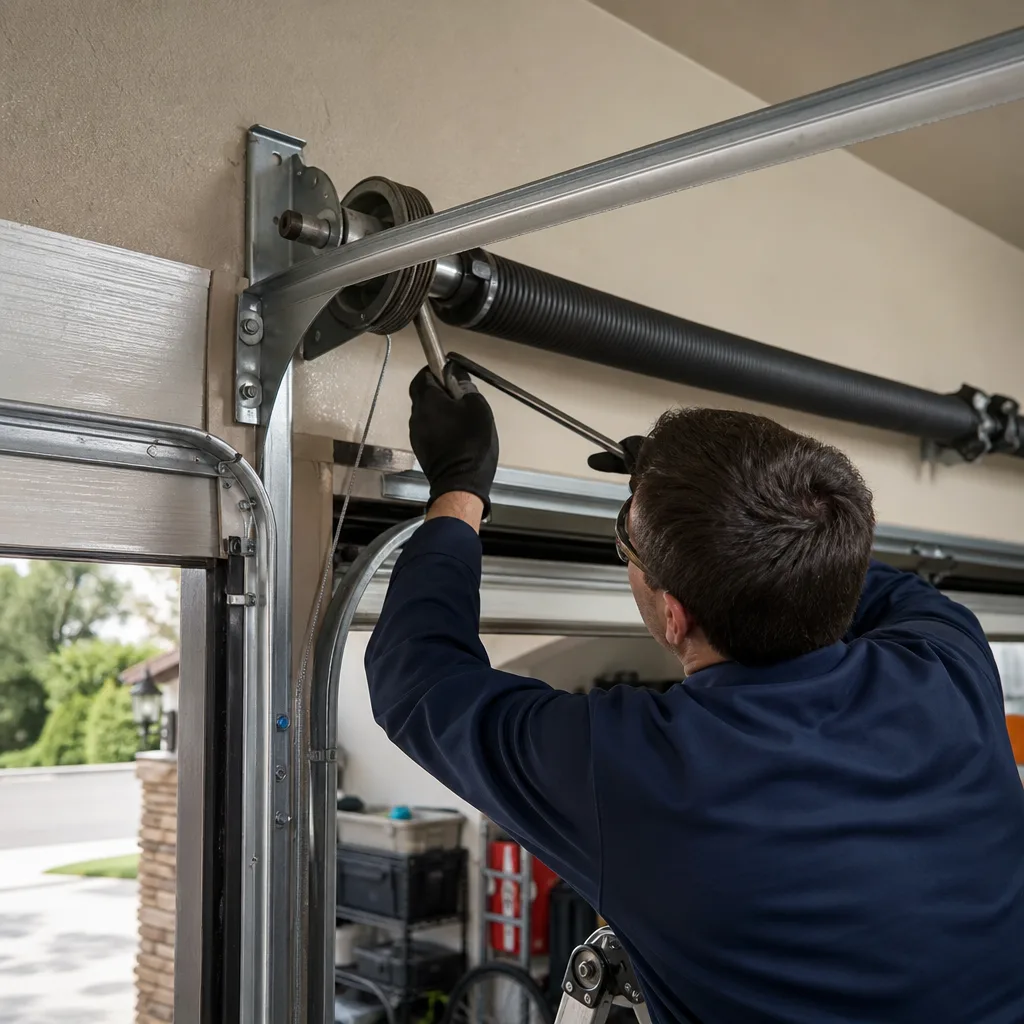
- DIY spring replacement. Torsion springs store enough energy to kill or maim. Extension springs on older Santa Clarita homes can slip from their containment cables and cause lacerations. This is not a YouTube project. We carry springs for all major brands and install them with proper winding bars and safety procedures.
- Neglecting the backup battery. California requires battery backup on new garage door openers. The battery degrades in 2-3 years. Test it by unplugging the opener and operating the door. If it doesn’t open and close at least once, replace the battery before fire season, when power outages coincide with evacuation needs.
- Assuming all technicians are equivalent. Santa Clarita has no licensing requirement specific to garage door repair. Ask for proof of general liability insurance, workers’ compensation, and background check verification. Our technicians are uniformed, background-checked, and trained under our K.E.Y.S. values code: Krafted right, Every time, Your home first, Standing behind it.
When to Call a Professional
Call when the door makes a new sound, moves unevenly, or fails any safety test. Call before the emergency, not during it. Call when springs, cables, or openers need attention - these are not homeowner repairs in any circumstance.
Specifically in Santa Clarita: call if your door has survived a Santa Ana wind event without inspection, if you’re entering a second fire season on original weatherstripping, or if your home was built between 1985 and 2005 and still has original springs. Those springs are at or beyond rated cycle life. Replacement on your schedule is preferable to replacement on the spring’s schedule.
Mainspring Garage Door Co. offers free estimates in Santa Clarita. A technician arrives with a fully stocked truck, assesses your door, and states a flat price before any work begins. Most repairs are completed in a single visit. Every job carries our 90-Day Done Right Promise in writing. Call (661) 384-8741. A live person answers, 24/7, including nights, weekends, and holidays.
Frequently Asked Questions
Professional service once annually, plus monthly visual inspections and the January manual operation test. Santa Clarita’s dust, heat, and temperature swings justify this frequency. Call (661) 384-8741 to schedule our $89 Seasonal Tune-Up.
Yes, for accessible components. Apply white lithium grease to roller bearings, hinge pins, and spring coils. Apply silicone spray to weatherstripping. Do not lubricate tracks. Do not touch torsion springs or cables. If you’re uncertain which product goes where, our technician demonstrates during any service call.
Thermal expansion of steel tracks in Santa Clarita’s 100°F-plus heat reduces roller clearance. Check that track bracket fasteners allow movement and that lateral clearance is adequate. Do not force binding doors with the opener - this strips drive gears and warps door sections. Track adjustment requires professional tools and technique.
Our Seasonal Tune-Up is $89 flat. Repairs, if needed, are quoted in writing before work begins. We offer $50 off any repair over $250, a free second opinion on any written estimate, and a permanent 5% discount for seniors and veterans. The price you agree to is the price on the invoice.
No. We quote flat prices based on description and, if needed, photo assessment. For complex conditions, we provide a free on-site estimate with no obligation. The written estimate is the final price. We do not add trip charges, after-hours fees, or “discovered” costs. That’s the Mainspring standard since 1984.
Our trucks are stocked with springs, cables, rollers, hinges, and openers for LiftMaster, Chamberlain, Genie, Clopay, Amarr, Wayne Dalton, Craftsman, and Raynor. Most Santa Clarita repairs are completed in a single visit because we arrive with the correct parts. Factory-unfamiliar brands may require a next-day order, which we disclose upfront.
The Bottom Line
Santa Clarita’s garage doors face four distinct stress periods: October cold snaps that kill springs, May-June fire season that tests seals, July-August heat that binds tracks, and Santa Ana winds that grind grit into every moving part. A maintenance calendar aligned to these realities - rather than generic spring-and-fall advice - prevents the emergency calls that wake you at dawn. The January manual operation test, the October spring listen, the pre-fire seal inspection, and the post-wind cleanup are specific, timed actions that take minutes and save thousands. Do them yourself where appropriate. Call us for everything else. Explore more guides & resources on our blog. We’ve been serving Santa Clarita since 1984, we answer live around the clock, and we stand behind every job for ninety days in writing. That’s a square deal.
Written by Carl Dutton, Owner at Mainspring Garage Door Co., serving Santa Clarita since 2016.